History of Padel: From Mexican Invention to Global Paddle Tennis Phenomenon
Affiliate disclosure: This article contains affiliate links. If you purchase through these links, we may earn a small commission at no extra cost to you.
The history of padel is one of the most fascinating origin stories in modern sport. Born in Mexico in 1969, padel has grown from a backyard experiment into the world's fastest-growing racket sport — played in over 90 countries by more than 25 million people.
When Was Padel Invented?
Padel was invented in 1969 in Acapulco, Mexico. That makes it over 55 years old as of 2026. Despite its age, padel only became a global phenomenon in the last two decades — which is why many people assume it's a much newer sport.
Who Invented Padel?
Padel was invented by Enrique Corcuera, a Mexican businessman. He built the first padel court in the garden of his home in Acapulco, adapting the space available by adding walls to a modified tennis court.
The sport spread quickly when Alfonso de Hohenlohe, a Spanish nobleman, discovered the game at Corcuera's home and brought it back to Spain. He built the first padel courts in Marbella in 1974. From there, padel exploded across Spain and Latin America.
History of Padel: From Mexico to the World
The growth of padel followed a clear path from its Mexican origins to global dominance:
- 1969: Enrique Corcuera invents padel in Acapulco, Mexico
- 1974: Alfonso de Hohenlohe introduces padel to Spain via Marbella
- 1975: Julio Menditeguy brings padel to Argentina — it becomes hugely popular
- 1991: International Padel Federation (FIP) founded in Madrid
- 1992: First Padel World Championship held
- 2000s: Padel spreads across Europe, especially in Sweden, Italy, and Portugal
- 2010s: Professional padel circuit grows rapidly worldwide
- 2020s: Padel reaches 90+ countries; declared the world's fastest-growing racket sport
What Is Padel?
Padel is a racket sport played in doubles on an enclosed court with glass walls and metal mesh. The court is 20 x 10 metres — about a third of a tennis court.
The walls are part of play. You can let the ball bounce off the back or side glass before returning it. The serve is always underhand. Scoring follows tennis rules.
Padel is easier to learn than tennis. Rallies last longer, the court is smaller, and the walls give you more time to react. This makes it accessible for all ages and fitness levels. Ready to start playing? Browse our Padel Made Easy training resources to find drills and exercises for every level.
Why Is Padel So Popular?
Padel's explosive growth comes down to three things: it's social, accessible, and addictive.
It's always played in doubles, which makes every session a social event. The learning curve is gentle enough that beginners enjoy their first game. And the tactical depth keeps advanced players engaged for years.
In Spain alone, there are over 20,000 padel courts. The sport is now the second most popular sport in the country after football.
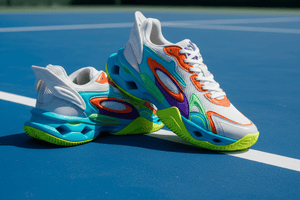
🎾 Ready to pick up a racket? Here's what you need to get started: Best padel rackets — Head, Babolat, Wilson, Bullpadel & NOX • Official padel balls — Head, Wilson & Dunlop • Padel court shoes — Adidas, Asics & Nike

Padel vs Tennis: Key Differences
Padel and tennis share the same scoring system and many of the same strokes. But the two sports feel very different on court.
- Court size: Padel courts are 20x10m vs tennis courts at 23.77x10.97m (singles)
- Walls: Padel has glass and mesh walls that are part of play. Tennis has none.
- Serve: Padel uses an underhand serve. Tennis uses an overhead serve.
- Format: Padel is always doubles. Tennis can be singles or doubles.
- Learning curve: Padel is significantly easier to learn than tennis.
Top Padel Associations
- International Padel Federation (FIP) — global governing body
- Playtomic — find and book padel courts near you