Pickleball Terms: Complete Glossary of Pickleball Terminology
Pickleball terminology can be confusing when you're starting out. Players on court throw around words like “dink,” “stacking,” “Erne,” and “Kitchen” as if everyone already knows what they mean. This complete glossary covers every official and unofficial pickleball term — from the IFP rulebook to the slang you’ll hear between points at your local club. Bookmark it and come back whenever someone says something you don’t recognise.
Affiliate Disclosure: This article contains affiliate links. If you purchase through these links, we may earn a small commission at no extra cost to you. We only recommend quality products we believe in.
Official Court and Rules Terminology
Kitchen (Non-Volley Zone / NVZ)
The Kitchen is the most important piece of pickleball vocabulary you will learn. It refers to the Non-Volley Zone (NVZ) — the 7-foot area on either side of the net where you cannot volley the ball (hit it out of the air). You can enter the Kitchen to play a ball that has bounced, but you must exit before volleying again. The Kitchen is the tactical heart of pickleball: most points are won and lost at the Kitchen line.
Non-Volley Zone (NVZ)
The official rules term for the Kitchen. The NVZ extends 7 feet from the net on both sides and includes the Kitchen line itself. Stepping on the Kitchen line while volleying is a fault.
Kitchen Line
The line that marks the boundary of the Non-Volley Zone. It is part of the NVZ — if your foot touches it during a volley, it is a fault.
Baseline
The line at the back of the court, parallel to the net. Serves must be struck from behind the baseline.
Centreline
The line that divides the two service boxes on each side of the court, running from the Kitchen line to the baseline.
Service Box
The rectangular area into which a serve must land. There are two service boxes per side — right (even) and left (odd). The serve must land in the diagonally opposite service box.
Rally
A sequence of shots played between players after the serve, continuing until a fault is committed and a point (or side-out) is awarded.
Fault
Any action that stops play and results in either a point for the opponent or a side-out. Common faults include hitting the ball out of bounds, volleying from the Kitchen, failing the two-bounce rule, or the ball touching the net and not clearing it.
Side-Out
When the serving team commits a fault and the serve passes to the opposing team. In traditional pickleball scoring, only the serving team can score points.
Two-Bounce Rule (Double Bounce Rule)
One of pickleball’s most important rules. After the serve, both teams must let the ball bounce once before volleying — the receiving team lets the serve bounce, and the serving team lets the return bounce. After these two bounces, both teams may volley freely. This rule prevents serve-and-volley dominance and creates longer, more tactical rallies.
Volley
Hitting the ball out of the air before it bounces. Volleys are legal everywhere on court except the Kitchen (NVZ).
Groundstroke
A shot played after the ball has bounced on your side of the court. Groundstrokes can be played from anywhere, including inside the Kitchen after a bounce.
Let
A serve that clips the top of the net and lands in the correct service box. Under current IFP rules, lets are played — the serve is replayed. (Note: some recreational games still call lets as faults; check local rules.)
Drop Serve
An alternative serve method where the server drops the ball and strikes it after it bounces. The ball must be dropped naturally (not thrown upward or downward) and struck below the waist. Introduced as a permanent rule option in 2021.
Volley Serve
The traditional serve method, where the ball is struck out of the air with an underhand motion. The paddle must contact the ball below the waist, the paddle head must be below the wrist, and the arm must move in an upward arc.
Scoring Terms
Traditional Scoring (Side-Out Scoring)
The original pickleball scoring system. Only the serving team can win points. A game is played to 11 points, win by 2. Scores are called as three numbers: server’s score – receiver’s score – server number (1 or 2 in doubles).
Rally Scoring
A scoring format where either team can win a point on any rally, regardless of who is serving. Increasingly used in tournament play and recreational leagues for faster games. Games are typically played to 21 points, win by 2.
Server 1 / Server 2
In doubles, each team has two servers per side-out opportunity (except at the start of a game, where the first serving team only has one server). The third number in the score call indicates which server is serving — 1 or 2.
First Server Exception
At the start of a game, the first serving team begins with only one server (Server 2) to prevent an unfair advantage from having two serves to open the match.
Shot Names
Dink
The signature shot of pickleball. A dink is a soft, controlled shot played from near the Kitchen line that arcs just over the net and lands in the opponent’s Kitchen. Dinking is the art of the soft game — forcing opponents to hit up on the ball, creating opportunities to attack. The player who controls the dink exchange usually controls the point.
Third Shot Drop
One of the most important shots in pickleball strategy. After the serve (shot 1) and the return (shot 2), the serving team faces the third shot. A third shot drop is a soft, arcing shot that lands in the opponent’s Kitchen, neutralising their net advantage and allowing the serving team to advance to the Kitchen line. Mastering the third shot drop is the single biggest leap a developing pickleball player can make.
Drive
A fast, flat groundstroke hit with pace to push opponents back or force a weak reply. Drives are the power alternative to the drop on the third shot, and are most effective when opponents are out of position.
Lob
A high, deep shot designed to push opponents back from the Kitchen line. A well-executed lob over backhand sides can win points outright; a poorly executed lob is a sitting duck for an overhead smash.
Overhead (Smash)
A powerful downward shot played from above the head, usually in response to a lob. The overhead smash is one of pickleball’s most emphatic winning shots when executed cleanly.
Speed-Up (Flick / Attack)
An aggressive acceleration of the ball during a dink exchange, designed to catch opponents off guard. A well-timed speed-up at the Kitchen line is a primary attacking weapon in competitive pickleball.
Reset
A defensive shot that returns an aggressive ball softly back into the Kitchen, resetting the rally to a dinking exchange. The ability to reset under pressure — absorbing pace and placing the ball gently — is a hallmark of advanced pickleball players.
ATP (Around the Post)
A legal shot where the ball is hit around the outside of the net post rather than over the net. ATP shots do not need to pass above net height and are some of the most spectacular winners in pickleball. The ball must land in the opponent’s court.
Erne
Named after Erne Perry, who popularised it. The Erne is a volley played from beside or just outside the Kitchen, allowing the player to legally volley a ball that would otherwise land in the NVZ. Executed by jumping around the Kitchen corner or positioning beside it before the ball arrives. A legal and devastating weapon when timed correctly.
Bert
A variation of the Erne executed by your partner — your doubles partner crosses over to your side to hit an Erne. Named as a play on “Erne,” referencing the Sesame Street characters Bert and Ernie.
Malakai
A trick shot where the player lets the ball pass their body and hits it behind their back or between their legs. Primarily a crowd-pleaser in recreational play, but occasionally deployed in competitive play as a distraction or last resort.
Rollover
A topspin dink that rolls over the net with heavy topspin, making it difficult to judge the bounce and challenging to reset cleanly.
Chicken Wing
A defensive shot where the player jabs their elbow out (like a chicken wing) to block a fast ball aimed at their body. Usually an emergency defensive response rather than a deliberate choice.
Body Bag / Body Shot
Deliberately targeting the opponent’s body — particularly their hip or torso — with a fast drive. Body shots are effective because they give the opponent no room to swing and often produce weak replies or faults.
Poach
In doubles, crossing to your partner’s side to intercept and volley a ball that would otherwise go to them. Poaching is an aggressive doubles tactic that can win points but leaves your side exposed if mistimed.
Strategy and Positioning Terms
Stacking
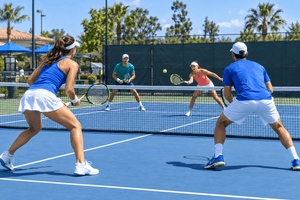
A doubles formation where both players line up on the same side before the serve or return, then move to their preferred side after the ball is struck. Stacking allows teams to keep their stronger forehand players covering the middle and is a common tactic at intermediate and advanced levels.
Transition Zone
The area between the baseline and the Kitchen line. Moving through the transition zone quickly — rather than camping in the middle of the court — is essential good pickleball. The transition zone is the most dangerous place to be caught when the ball comes at your feet.
Skinny Singles
A format where singles is played using only half the court (one service box and the corresponding half of the opposite court). Skinny singles is used for practice and fitness, simulating the angles and exchanges of doubles play in a smaller space.
Banger
A player (or style of play) that relies primarily on driving the ball hard rather than playing the soft game. Bangers try to overpower opponents rather than out-dinking them. Effective against weak reset players; vulnerable to players with excellent soft hands.
Soft Hands
The ability to absorb pace and play controlled soft shots — dinks and resets — under pressure. Soft hands are a defining skill of advanced pickleball players and the primary defence against bangers.
Two Up / Two Back
Formation descriptions. Two up means both doubles partners are at the Kitchen line (the ideal offensive position). Two back means both are at the baseline (a defensive position, typically after being lobbed).
One Up / One Back
A transitional doubles formation where one player is at the Kitchen and one is back. This is generally the weakest position in doubles — the goal is always to get both players to the Kitchen as quickly as possible.
Middle
Targeting the centre of the court between two doubles opponents — a classic winning strategy that creates confusion about who should take the ball and often draws a weak reply or a collision.
Player Classification Terms
DUPR (Dynamic Universal Pickleball Rating)
The most widely used pickleball rating system globally. DUPR ratings range from 2.0 (complete beginner) to 8.0 (world-class professional). Ratings are calculated dynamically based on match results, with every point counted regardless of tournament level or location.
UTPR (USA Pickleball Tournament Player Rating)
The official tournament rating used by USA Pickleball for sanctioned events in the United States. Used alongside DUPR in the American competitive scene.
Open / Pro
The highest division in pickleball tournaments, open to any player regardless of rating. Pro events offer prize money and are contested by the world’s best players.
Age Brackets
Tournament divisions organised by age — typically 35+, 40+, 50+, 55+, 60+, 65+, 70+, 75+, and 80+. Age bracket competition is enormously popular in pickleball, with dedicated senior players competing at a very high level.
Pickleball Slang and Informal Terms
Pickled
Losing a game 11–0 (or 15–0, or 21–0 in rally scoring) without scoring a single point. “We got pickled” means you were shut out completely.
Dinker
A player who excels at the soft game and prefers to play long dink exchanges rather than driving the ball. Usually a compliment in advanced circles; sometimes used dismissively by bangers.
Bangaroo
A particularly aggressive banger — a player who drives almost every ball regardless of situation. Informal and slightly affectionate slang.
Nasty Nelson
Deliberately serving the ball into the non-receiving partner’s body during doubles play. If the ball hits the non-receiving partner, the serving team wins the point. Technically legal; widely considered unsportsmanlike in recreational play.
Falafel
A shot with no pace — a dead ball that barely makes it over the net. Usually unintentional and the result of poor contact. Also called a “dead dink.”
Hinder
An interference that affects play — such as a ball from another court rolling onto yours during a rally. A hinder typically results in a replay of the point.
Tweener
A shot played between the legs, usually while running away from the net after being lobbed. A spectacular trick shot when it lands; a highlight reel blunder when it doesn’t.
Golden Pickle
Winning a game 11–0 while only using one server throughout (i.e., never losing a side-out). Exceptionally rare and cause for celebration.
Perpetual Motion
A long dink exchange that seems to go on indefinitely, with neither team able to create a clean attacking opportunity. Often broken by a speed-up, an Erne, or an error.
Crash the Net / Rush the Kitchen
Aggressively advancing to the Kitchen line immediately after hitting a shot — particularly after a good third shot drop. Getting to the Kitchen quickly is a core tenet of good pickleball strategy.
Shake and Bake
A doubles strategy where one player drives the ball hard (the “shake”) to force a weak pop-up reply, and their partner poaches at the net to finish the point (the “bake”). Requires coordination and communication between partners.
Equipment Terms
Paddle Face
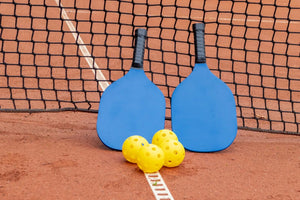
The hitting surface of the pickleball paddle. Faces are typically made from fibreglass, carbon fibre (raw or textured), or a combination. Textured carbon faces generate more spin; fibreglass faces tend to offer more power and a livelier feel.
Core
The interior of the paddle, sandwiched between the face sheets. Most modern paddles use a polypropylene honeycomb core. Core thickness affects feel: 16mm cores are softer and more forgiving; 14mm cores are firmer and faster.
Edgeguard
The protective strip around the perimeter of the paddle that protects the core from damage when the paddle strikes the ground. Some players remove the edgeguard for a slightly larger hitting surface, at the cost of durability.
Grip Circumference
The thickness of the paddle handle. Most pickleball paddles ship at 4 to 4.375 inches. Correct grip size prevents wrist and forearm strain; the same rule as tennis applies: the index finger of your non-paddle hand should fit in the gap between your fingertips and palm.
Paddle Weight
Typically measured in ounces. Lightweight paddles (under 7.5 oz) offer more manoeuvrability; heavier paddles (8.5 oz+) offer more power and stability. Mid-weight (7.8–8.2 oz) is the most common range for competitive players.
Outdoor Ball / Indoor Ball
Pickleball balls are designed differently for indoor and outdoor play. Outdoor balls are harder, heavier, and have smaller holes to handle wind and harder court surfaces. Indoor balls are softer and lighter with larger holes, optimised for smooth gym floors. Using the wrong ball for your surface affects play significantly.
Ready to Put These Terms into Practice?
Knowing the vocabulary is one thing — executing the shots is another. These two resources from Tennis Mindset will help you move from glossary reader to confident court player:
🎳 Pickleball Training Programs
Nathan & Giselle Martin — Pickleball Lessons, Drills, Workouts & Fitness
Coached by the team behind Martina Navratilova, Lleyton Hewitt and Sam Stosur, these programs take you from terminology to technique — drills for every shot in this glossary, footwork for the transition zone, and the mental game for Kitchen-line pressure. Structured for all levels.
“Nathan & Giselle Martin are the consummate professionals when it comes to tennis training… truly impressed with their training methods and expertise.”
Use code TM888 for 10% off.
See Pickleball Lessons & Drills →🎳 Also from Tennis Mindset
Pickleball Made Easy — Drills, Exercises & Training Guide

The complete pickleball training book — court positioning, the soft game, dinking drills and the mental side of competition. Everything in this glossary, explained through structured practice.
Get the Pickleball Book →Essential Pickleball Gear
- 🎳 Pickleball paddles — browse top-rated paddles across all price points
- 🎳 Pickleball balls — indoor and outdoor options
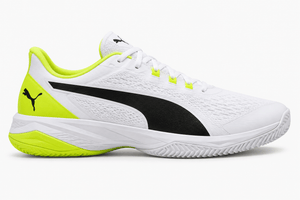
- 🎳 Pickleball shoes for men — lateral support, flat sole; do not use running shoes
- 🎳 Pickleball shoes for women — court-specific construction for safe lateral movement
- 🎳 Portable pickleball net — set up a court anywhere and practise every term in this glossary
More Pickleball from Tennis Mindset
- What Tennis Players Get Wrong About Pickleball Gear (And What Actually Transfers)
- Tennis Club: Complete Guide to Joining, Playing and Improving
Information accurate as of October 2026. Pickleball rules and terminology continue to evolve as the sport grows — always check the latest IFP and USA Pickleball rulebook for official definitions. Affiliate links help support Tennis Mindset at no extra cost to you.