How to Play Padel: Complete Beginner's Guide to Rules, Scoring & Tips (2026)
Learning how to play padel is one of the best decisions any racket sports fan can make. Padel is fast, social, and genuinely one of the easiest sports to pick up — most beginners are rallying and scoring within their very first session. This complete guide covers everything you need to know about how to play padel: the court, equipment, rules, scoring, serving, wall play, and tips to get started fast in 2026.
Affiliate disclosure: This article contains affiliate links. If you purchase through these links, we may earn a small commission at no extra cost to you.
What Is Padel?
Padel is a doubles racket sport played on an enclosed 10 x 20 metre court surrounded by glass walls and metal mesh. Players use solid paddles (no strings) and a slightly depressurised tennis ball. The walls are part of play — the ball can be played off the back and side glass walls after bouncing, creating extended rallies and spectacular shots that make padel unique among racket sports.
Padel was invented in Mexico in 1969 and is now the world's second most popular racket sport after tennis, with over 25 million players worldwide and rapid growth across Europe, Latin America, and beyond.
Padel Equipment: What You Need
To learn how to play padel, you need minimal equipment:
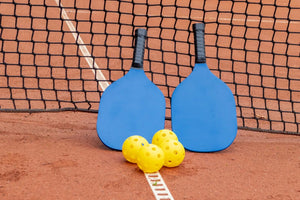
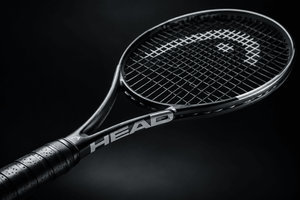
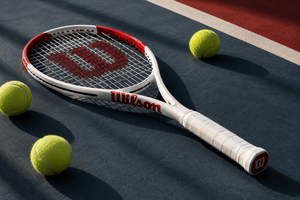
- Padel paddle: A solid paddle with no strings, made from composite, carbon fibre, or fibreglass. Maximum 45.5 cm long. Best padel rackets — Head, Babolat, Wilson, Bullpadel & NOX →
- Padel balls: Slightly less pressurised than tennis balls. Always use proper padel balls, not tennis balls. Best padel balls →
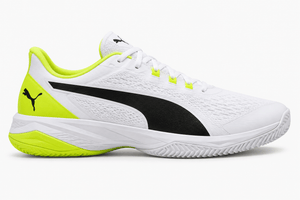
- Padel shoes: Court shoes with lateral support and a herringbone sole for grip on artificial grass. Padel shoes men → • Padel shoes women →
The Padel Court
Understanding the court is the first step in learning how to play padel:
- Court size: 10 m x 20 m (33 ft x 66 ft) — about 25% smaller than a tennis court
- Net height: 88 cm (34.6 in) at the centre, 92 cm (36.2 in) at the posts
- Back walls: Glass walls 3 m high at the back of each side — the ball can be played off these after bouncing
- Side walls: Glass and mesh walls on the sides — also in play after the ball bounces
- Service boxes: Two diagonal service boxes on each side, similar to tennis
- Surface: Artificial grass (most common), concrete, or synthetic carpet
🎾 Get Your Padel Gear
Everything you need to get on a padel court today.
 Padel Balls →
  Padel Shoes Men →
  Padel Shoes Women →
As an Amazon Associate, we earn from qualifying purchases.
How to Play Padel: The Basic Rules
The Serve
Every point starts with a serve. Here's how to serve correctly when learning how to play padel:
- The serve must be underhand — the ball must be struck at or below waist height
- The server stands behind the service line, between the centreline and the side wall
- The ball must bounce once before being struck
- The serve must land in the diagonal service box on the other side of the net
- There are two serve attempts (first and second serve), like tennis
- A let serve (clips the net and lands in) is replayed
Playing the Walls
Wall play is the most exciting and unique aspect of learning how to play padel:
- After the ball bounces on your side, it may hit the back or side glass walls — and you can still play it
- You can also play the ball directly off the wall before it bounces on your side (if it comes off the opponent's wall)
- If the ball goes over the top of the wall and out of the court, it is out
- Players can exit through the gate opening to play a ball that has left the court — a spectacular and legal play
Scoring
Padel uses the same scoring as tennis — one of the easiest things for tennis players when learning how to play padel:
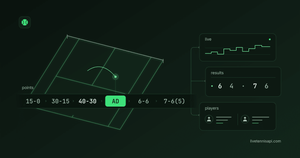
- Points: 15, 30, 40, game (deuce at 40-40)
- Games: First to 6 (tiebreak at 6-6)
- Sets: Best of 3 sets — first to win 2 sets wins the match
- Either team can score on any point, regardless of who is serving
Faults
Common faults when learning how to play padel:
- Ball lands out of bounds or goes over the wall
- Ball bounces twice before being played
- Ball hits the net and doesn't cross
- Serve fault (wrong box, above waist, foot fault)
- Ball hits a player before bouncing — point to the opponent
Padel Strategy: Tips for Beginners
- Get to the net: The team at the net controls the point in padel. After the serve and return, move forward to the net as quickly as possible
- Use the walls: Don't be afraid of the walls — they're your friend. Playing the ball off the back wall gives you more time and creates angles your opponents can't anticipate
- Communicate with your partner: Padel is a doubles game. Call "mine" or "yours" clearly to avoid confusion and cover the court effectively
- Aim for the feet: Shots aimed at your opponent's feet are the hardest to return. Low balls force weak replies
- Be patient: Padel rallies are longer than tennis. Don't rush — wait for the right ball to attack
- Serve deep: A deep serve to the back wall forces your opponent into a defensive position and gives you time to advance
🎾 Master Padel Faster
Complete padel training guides — drills, tactics, footwork, and the mental game for every level.
 Get the Padel Made Easy Collection →
Frequently Asked Questions: How to Play Padel
Is padel easy to learn?
Yes — padel is one of the easiest racket sports to learn. The court is small, the ball moves at a manageable pace, the underhand serve is simple to execute, and the walls give you extra time to reach the ball. Most beginners are playing real points within their first session.
Do I need to know tennis to play padel?
No — padel is a great sport for complete beginners with no racket sports background. However, tennis players pick up how to play padel very quickly because the scoring is identical and many of the strokes are similar.
Can you play padel singles?
Officially, padel is a doubles sport. The court is designed for four players and singles is not practical at competitive level. However, some recreational players do play informally in singles format.
How is padel different from tennis?
Padel uses an enclosed court with glass walls, an underhand serve with a bounce, solid paddles instead of strung rackets, and wall play after the bounce. The scoring is the same as tennis. See our full Padel vs Tennis comparison →
How long does a padel match last?
A recreational padel match (best of 3 sets) typically lasts 60–90 minutes. Competitive matches can last longer depending on the level and closeness of the match.