Tennis Serve Tips: How to Improve Your Serve (Complete Guide)
The serve is the most important shot in tennis. It's the only shot you fully control — no opponent can influence it. These tennis serve tips will help you build a more consistent, powerful, and tactical serve at any level.
🎾 Elite Tennis Coaching Programs — At Affordable Prices
The internet has made world-class tennis coaching accessible to everyone. The same coaches behind 5 World No.1 players — including Martina Navratilova — now offer structured online programs for players of all levels.
See All Coaching Programs →Why Your Serve Matters More Than Any Other Shot
In professional tennis, the serve accounts for roughly 40% of all points played. At club level, a reliable serve wins free points and sets up easy second shots.
A weak serve, on the other hand, puts you immediately on the defensive. Improving your serve is the single highest-return investment you can make in your tennis game.
Tennis Serve Tips: Start With the Grip
The correct grip for serving is the continental grip — also called the hammer grip. Hold the racket as if you're holding a hammer, with the base knuckle of your index finger on bevel 2.
Most beginners use an eastern forehand grip to serve. This limits spin, reduces power, and makes it harder to hit a reliable second serve. Switch to the continental grip as early as possible.
The continental grip allows you to pronate your forearm through contact — the key movement that generates both power and spin on the serve.
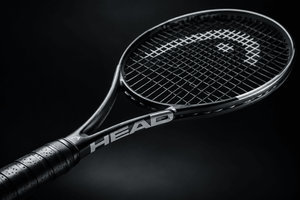
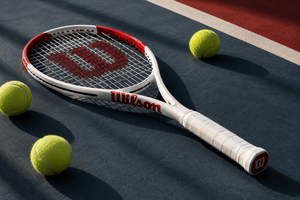
🎾 Serving starts with the right racket in your hand. A racket that's too heavy or too light will sabotage your toss and motion before you even start. Our top picks for every level: Wilson — the serve machine trusted by millions • Babolat — built for power and spin • Head — precision feel from first serve to match point • Prince — great value, serious performance • Tecnifibre — the pro's secret weapon
The Ball Toss: The Foundation of a Good Serve
A consistent ball toss is the most underrated element of a good serve. Most serve problems — double faults, inconsistent contact, lack of power — trace back to a poor toss.
Follow these rules for a reliable toss:
- Release the ball at eye level — don't throw it, let it roll off your fingertips
- Toss slightly in front of your body and to the right (for right-handers)
- Height: Toss to the peak of your reach plus a few centimetres
- Consistency drill: Toss the ball and let it land — it should land just inside the baseline, slightly to your right
Practise the toss separately without hitting. Do 20 tosses before every serve session until it becomes automatic. Use a good pressureless training ball for toss drills — they last much longer and are perfect for repetition practice.
The Serve Motion: Trophy Position to Contact
A good serve motion has three key phases:
Phase 1 — Trophy position: Weight on the back foot, racket arm bent at 90 degrees, tossing arm fully extended upward. This is the "trophy" position — the foundation of every great serve.
Phase 2 — The drop: The racket drops behind your back (the "back scratch" position) as your legs drive upward. This loads the kinetic chain from legs to shoulder to racket.
Phase 3 — Contact and pronation: Drive up and forward to the ball. At contact, pronate your forearm — rotate it so the racket face turns from facing left to facing forward. This is what generates power and topspin.
Tennis Serve Tips: Placement Over Power
Most club players try to serve too hard. Placement beats power at every level below professional tennis.
Practise serving to three zones in each service box:
- Wide: Pulls the opponent off the court, opens the court for your next shot
- Body: Jams the opponent, limits their swing, forces a weak return
- T (centre): Limits the angle of return, keeps the point central
Place a cone in each zone and aim for 7 out of 10 in each before moving on. Vary your placement every game so opponents can't anticipate your serve.
How to Improve Your Second Serve
The second serve is where most club players lose confidence. A weak second serve invites attackers and creates pressure on every point.
The solution is a kick serve — a topspin second serve that bounces high and away from the returner. Here's how to develop it:
- Use the continental grip (essential for spin)
- Toss the ball slightly behind your head and to the left (for right-handers)
- Brush up and over the ball at contact — from 7 o'clock to 1 o'clock
- Aim higher over the net than your first serve — spin brings it down
A reliable kick serve gives you a second serve you can trust under pressure. It's the most important serve skill to develop after your basic first serve.

Serve Drills to Improve Fast
Structured serve practice accelerates improvement far more than casual hitting. Use these three drills every session:
- Toss-only drill: Practise 20 tosses without hitting. Let the ball land and check placement. Do this before every serve session.
- Zone targeting: Place cones in the wide, body, and T zones. Serve 10 balls to each zone. Track your success rate.
- Pressure serving: Play first-to-5 serving games with a partner. One player serves, the other returns. Switch after 5 points. The stakes make it real.
The Mental Game: Serving Under Pressure
Double faults are almost always a mental problem, not a technical one. The mechanics that work in practice break down under pressure because the brain shifts from automatic to conscious processing.
Use these three strategies to serve better under pressure:
- Slow down your routine: Take one extra breath before serving on big points. Rushing is the enemy of a good toss.
- Pick your target first: Decide where you're serving before you start your routine. Commit fully. Doubt causes double faults.
- Trust your second serve: If you fear your second serve, you'll tighten up on your first. Build a reliable kick serve so you can swing freely on both.
Tennis Serve Tips: Quick Reference
| Element | Key Point |
|---|---|
| Grip | Continental (hammer grip) — bevel 2 |
| Toss | Slightly in front and right, eye-level release |
| Trophy position | Racket arm at 90°, toss arm fully extended |
| Contact | Drive up, pronate forearm through the ball |
| Placement | Wide, body, T — vary every game |
| Second serve | Kick serve — topspin, aim higher over net |
| Mental game | Slow routine, commit to target, trust your serve |
Frequently Asked Questions: Tennis Serve Tips
What grip should I use for the tennis serve?
Use the continental grip (hammer grip) for all serves. Place the base knuckle of your index finger on bevel 2 of the racket handle. This grip allows pronation, which generates power and spin. Avoid the eastern forehand grip — it limits your serve significantly.
How do I stop double faulting?
Double faults are usually caused by a poor ball toss, rushing the routine under pressure, or lack of confidence in the second serve. Fix your toss first — practise 20 tosses before every session. Then develop a kick serve so you have a reliable second serve you can trust.
How can I add more power to my serve?
Power comes from the kinetic chain — legs, core, shoulder, arm, racket. Drive up with your legs, drop the racket into the back-scratch position, then pronate through contact. Most players lose power by using only their arm. Use your whole body.
How do I improve my serve consistency?
Consistency starts with a reliable ball toss. Practise the toss separately until it's automatic. Then focus on a smooth, repeatable motion rather than maximum power. Aim for 80% of your maximum pace — this dramatically improves consistency without sacrificing much speed.
What is a kick serve and how do I hit one?
A kick serve is a topspin second serve that bounces high and away from the returner. Use the continental grip, toss slightly behind your head, and brush up and over the ball from 7 o'clock to 1 o'clock. Aim higher over the net than your first serve — the topspin brings it down into the box.