Tennis Ball Types: Which Ball Should You Use? (Complete Guide)
Not all tennis balls are the same. Choosing the right tennis ball types for your age, level, and court surface makes a significant difference to how you learn and play. This complete guide covers every type of tennis ball — from beginner red balls to professional pressurised balls — and tells you exactly which one to use.
🎾 Elite Tennis Coaching Programs — At Affordable Prices
The internet has made world-class tennis coaching accessible to everyone. The same coaches behind 5 World No.1 players — including Martina Navratilova — now offer structured online programs for players of all levels.
See All Coaching Programs →Why Tennis Ball Types Matter
Using the wrong ball is one of the most common mistakes beginners and junior players make. A standard yellow ball moves too fast and bounces too high for young children or complete beginners.
The ITF (International Tennis Federation) developed a staged ball system to match ball speed and bounce to the player's development level. Each stage uses a different ball to make the game more accessible and help players develop proper technique faster.
The 5 Main Tennis Ball Types
1. Red Ball (Stage 3 — Beginners & Under 8s)
The red ball is the slowest and lowest-bouncing tennis ball. It moves at 75% slower than a standard yellow ball.
- Best for: Children under 8, complete beginners, mini tennis
- Court size: Used on mini courts (11m x 5.5m)
- Bounce: Very low — stays in the strike zone longer
- Benefit: Allows young players to rally immediately and build technique
Red balls are used in mini tennis for kids and are the starting point for all junior development programmes worldwide. Shop red balls on Amazon →
2. Orange Ball (Stage 2 — Ages 8–10)
The orange ball moves at 50% slower than a standard yellow ball. It bounces higher than the red ball but is still much more manageable than a full yellow ball.
- Best for: Children aged 8–10, developing beginners
- Court size: Used on 18m x 6.4m courts
- Bounce: Medium-low
- Benefit: Allows players to start developing groundstrokes and serve
3. Green Dot Ball (Stage 1 — Ages 10–12)
The green dot ball moves at 25% slower than a standard yellow ball. It's played on a full-size court and is the final transition stage before the standard yellow ball.
- Best for: Children aged 10–12, advanced juniors transitioning to full court
- Court size: Full court (23.77m x 10.97m)
- Bounce: Slightly lower than yellow
- Benefit: Builds confidence on a full court before moving to standard balls
Shop green dot balls on Amazon →
4. Standard Yellow Ball (Pressurised)
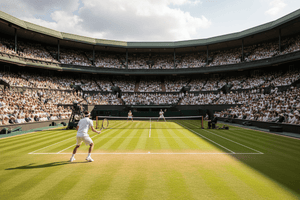
The standard yellow pressurised ball is used in all professional and recreational adult tennis. It's the ball you see at Wimbledon, the US Open, and your local club.
- Best for: Adults, advanced juniors (12+), all competitive play
- Court size: Full court
- Bounce: Standard — fast and lively
- Lifespan: 1–3 hours of play before losing pressure
Pressurised balls lose bounce over time as the internal pressure drops. Most players replace them after 2–3 playing sessions. Professional tournaments use new balls every 7–9 games. Shop yellow balls on Amazon →
5. Pressureless Ball
Pressureless balls have no internal air pressure. They maintain their bounce for much longer than pressurised balls — sometimes years.
- Best for: Practice, ball machines, training drills
- Bounce: Slightly harder and heavier feel than pressurised balls
- Lifespan: Very long — the felt wears out before the bounce does
- Not ideal for: Match play or developing touch and feel
Pressureless balls are ideal for tennis drills and ball machine sessions where you need consistent bounce over a long period. Shop pressureless balls on Amazon →
Tennis Ball Types by Court Surface
Different court surfaces also affect which ball to choose:
- Hard courts: Standard pressurised balls work well. Extra-duty felt balls last longer on abrasive hard courts.
- Clay courts: Regular-duty felt balls are recommended. Clay is softer and wears balls less aggressively.
- Grass courts: Standard pressurised balls. Grass is fast, so ball choice matters less than on clay.
- Indoor courts: Regular-duty felt balls. Indoor surfaces are gentler on the felt.
Tennis Ball Types Comparison Table
| Ball Type | Speed | Best For | Court Size |
|---|---|---|---|
| Red (Stage 3) | 75% slower | Under 8s, mini tennis | Mini court |
| Orange (Stage 2) | 50% slower | Ages 8–10 | 3/4 court |
| Green Dot (Stage 1) | 25% slower | Ages 10–12 | Full court |
| Yellow (Pressurised) | Standard | Adults, competitive play | Full court |
| Pressureless | Slightly heavier | Practice, ball machines | Full court |

Frequently Asked Questions: Tennis Ball Types
What tennis ball should a beginner use?
Adult beginners should use a standard yellow pressurised ball. Children under 8 should start with a red ball, ages 8–10 with an orange ball, and ages 10–12 with a green dot ball. Using the right ball for your age and level helps you develop proper technique faster.
How long do tennis balls last?
Pressurised tennis balls typically last 1–3 hours of play before losing significant bounce. Pressureless balls can last months or years. For match play, replace pressurised balls every 2–3 sessions. For practice drills, pressureless balls are more economical.
What is the difference between extra duty and regular duty tennis balls?
Extra duty balls have thicker felt, designed for hard courts where the abrasive surface wears the felt faster. Regular duty balls have thinner felt, better suited to clay and indoor courts. Using extra duty balls on clay can make them feel heavy and slow.
Can you use any tennis ball on any court?
Technically yes, but it's not ideal. Extra duty balls on clay feel heavy. Regular duty balls on hard courts wear out faster. For best performance and longevity, match the ball type to your court surface.
What balls do professional players use?
Professional players use pressurised yellow balls approved by the ITF. Each Grand Slam uses a specific brand — Wilson at the US Open, Slazenger at Wimbledon, Babolat at Roland Garros, and Dunlop at the Australian Open. New balls are introduced every 7–9 games during professional matches.