Tennis Elbow Treatment: The Complete Guide to Recovery 2026
Tennis elbow treatment is one of the most searched topics in tennis — and for good reason. Tennis elbow (lateral epicondylitis) is a painful overuse injury affecting the tendons that attach to the outside of the elbow, and it's far more common than most people realise. Despite its name, only about 5% of tennis elbow cases actually occur in tennis players — the condition affects anyone who performs repetitive gripping or wrist extension movements, from office workers and painters to plumbers and chefs. This complete guide covers everything you need to know about tennis elbow treatment in 2026 — from understanding the causes and symptoms to the most effective exercises, braces and recovery strategies.
⚠️ Medical Disclaimer
This article is for informational and educational purposes only and does not constitute medical advice, diagnosis or treatment. The content on this page is not a substitute for professional medical advice from a qualified doctor, physiotherapist or healthcare provider. Always consult a qualified healthcare professional before starting any treatment, exercise program or making any decisions about your health. If you are experiencing severe, worsening or persistent elbow pain, seek medical attention promptly. Never disregard professional medical advice or delay seeking it because of something you have read on this website.
Affiliate disclosure: This article contains affiliate links. If you purchase through these links, we may earn a small commission at no extra cost to you. We only recommend products we believe in.
🎾 Recover smarter, play better. Get structured tennis drills, footwork programs and mental game training from elite coaches — use code TM888 for 10% off.
See Tennis Training Programs →What Is Tennis Elbow?
Tennis elbow (lateral epicondylitis) is an overuse injury caused by repetitive strain on the tendons that attach the forearm muscles to the lateral epicondyle — the bony bump on the outside of the elbow. The repeated stress causes small tears in the tendon, leading to pain, inflammation and weakness in the elbow, forearm and wrist. Tennis elbow is the most common elbow injury seen by doctors, affecting approximately 1–3% of the population each year.
Tennis Elbow Symptoms
The most common symptoms of tennis elbow include:
- Pain on the outside of the elbow — the defining symptom; pain at or just below the lateral epicondyle that may radiate down the forearm
- Weak grip strength — difficulty gripping objects, opening jars or shaking hands
- Pain when lifting or bending the arm — particularly when lifting with the palm facing down
- Pain when extending the wrist — wrist extension movements aggravate the affected tendons
- Morning stiffness — the elbow may feel stiff and sore first thing in the morning
- Pain that worsens with activity — symptoms typically worsen during and after repetitive gripping or forearm activities
Tennis Elbow Causes
Tennis elbow is caused by repetitive overuse of the forearm extensor muscles — most commonly through:
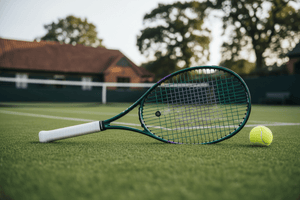
- Tennis — particularly a faulty backhand technique, using a racket that is too heavy or too tightly strung, or a grip that is too small or too large. See our beginner tennis racket guide for the right racket setup
- Repetitive workplace activities — typing, mouse use, painting, plumbing, carpentry and any work involving repetitive gripping or wrist extension
- Other racket sports — squash, badminton and padel can all cause tennis elbow through similar repetitive forearm loading
- Sudden increase in activity — dramatically increasing training volume or intensity without adequate recovery
Tennis Elbow Treatment: The Complete Guide
1. Rest and Activity Modification
The first and most important step in tennis elbow treatment is reducing or eliminating the activity causing the pain. This does not necessarily mean complete rest — but it does mean avoiding the specific movements that aggravate the tendon while it heals. For tennis players, this typically means:
- Taking a break from tennis or significantly reducing playing time
- Avoiding heavy lifting with the palm facing down
- Modifying grip technique and racket setup when returning to play
2. Ice and Anti-Inflammatory Treatment
In the acute phase of tennis elbow (first 48–72 hours of a flare-up), ice and anti-inflammatory measures can help reduce pain and swelling:
- Ice — apply an ice pack to the lateral elbow for 15–20 minutes, 3–4 times per day; always wrap ice in a cloth to protect the skin
- NSAIDs — over-the-counter anti-inflammatory medications (ibuprofen, naproxen) can reduce pain and inflammation in the short term; consult your doctor or pharmacist before use
- Topical anti-inflammatories — diclofenac gel applied directly to the lateral elbow can provide localised relief with fewer systemic side effects than oral NSAIDs
3. Tennis Elbow Brace
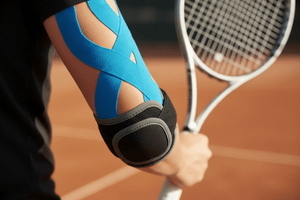
A tennis elbow brace (counterforce brace or epicondylitis clasp) is one of the most effective short-term tennis elbow treatment tools. The brace applies compression just below the lateral epicondyle, redistributing the load on the tendon and reducing pain during activity. Key points:
- Wear the brace during activity, not at rest or overnight
- Position the brace 2–3 finger-widths below the lateral epicondyle
- A brace manages symptoms but does not treat the underlying tendon damage — combine with exercises for best results
4. Tennis Elbow Exercises
Exercise is the most evidence-based long-term tennis elbow treatment. Specifically, eccentric and isometric exercises targeting the wrist extensors have been shown in multiple clinical studies to promote tendon healing and reduce pain. Key exercises:
Wrist Extensor Eccentric Exercise
- Sit with your forearm resting on a table, palm facing down, holding a light weight (0.5–1kg)
- Use your other hand to lift the wrist into extension, then slowly lower it under control over 3–5 seconds
- Perform 3 sets of 15 repetitions, once daily
- Some pain during the exercise is acceptable; sharp or severe pain is not — reduce the weight if needed
Isometric Wrist Extension
- Place your palm face-down on a table and press upward against the table's resistance
- Hold for 30–45 seconds; repeat 3–5 times
- Isometric exercises are particularly useful in the early stages when eccentric loading is too painful
Forearm Stretching
- Extend your arm in front of you, palm facing down
- Use your other hand to gently bend the wrist downward until you feel a stretch along the top of the forearm
- Hold for 30 seconds; repeat 3 times per session, 2–3 times per day
5. Physiotherapy
A physiotherapist can provide a structured, progressive tennis elbow treatment program tailored to your specific presentation. Physiotherapy for tennis elbow typically includes:
- Manual therapy and soft tissue massage to the forearm extensors
- A progressive loading program to rebuild tendon strength
- Technique analysis for tennis players to identify and correct the biomechanical faults causing the injury
- Advice on return-to-sport timelines and load management
6. Shockwave Therapy
Extracorporeal shockwave therapy (ESWT) is a non-invasive tennis elbow treatment that uses acoustic waves to stimulate tendon healing. It is typically recommended for chronic tennis elbow (lasting more than 3 months) that has not responded to conservative treatment. Multiple sessions are usually required, and results vary between individuals.
7. Corticosteroid Injections
Corticosteroid (cortisone) injections can provide short-term pain relief for tennis elbow but are not recommended as a long-term treatment. Research shows that while injections reduce pain in the short term, they are associated with higher recurrence rates at 12 months compared to physiotherapy and exercise. Injections are best used to provide a pain-free window to begin rehabilitation exercises.
8. Platelet-Rich Plasma (PRP) Injections
PRP injections — which use the patient's own blood plasma to stimulate tendon healing — are an emerging tennis elbow treatment with promising results in clinical studies. PRP is typically considered for chronic, treatment-resistant tennis elbow and is available from sports medicine specialists and orthopaedic surgeons.
9. Surgery
Surgery for tennis elbow is a last resort, considered only when all conservative treatments have failed after 6–12 months. Surgical options include open, arthroscopic and percutaneous procedures to remove damaged tendon tissue. The vast majority of tennis elbow cases — approximately 80–90% — resolve with conservative treatment and do not require surgery.
Tennis Elbow Treatment Timeline
- Mild cases (less than 3 months) — rest, ice, brace and exercise; most cases resolve within 3–6 months with consistent rehabilitation
- Moderate cases (3–6 months) — physiotherapy, progressive loading program, possible corticosteroid injection for pain management
- Chronic cases (6+ months) — shockwave therapy, PRP injections, specialist referral; surgery considered only after all other options exhausted
Preventing Tennis Elbow Recurrence
Once you've recovered from tennis elbow, preventing recurrence is essential:
- Check your racket setup — use a racket with the correct grip size, appropriate string tension (lower tension reduces shock transmission) and a weight suited to your level. See our tennis racket guide for recommendations
- Use a vibration dampener — a tennis vibration dampener reduces the shock transmitted to the arm on ball impact
- Warm up properly — always follow a structured tennis warm-up routine before playing
- Strengthen the forearm — continue wrist extensor strengthening exercises as part of your regular training routine, even after symptoms resolve
- Manage training load — avoid sudden spikes in playing volume; increase court time gradually
- Use an overgrip — a fresh tennis overgrip ensures you don't grip the racket too tightly to compensate for a slippery handle — a common cause of forearm overload
🎾 Tennis Mindset Shop
Everything You Need for the Court
Browse our curated tennis shop — top picks across every category, hand-selected for quality and value:
- Tennis Shoes — hard court, clay & grass
- Tennis Rackets — beginner to advanced
- Tennis Balls — pressurised & practice
- Tennis Bags — racket bags & backpacks
- Diamond Tennis Bracelets — on & off court
- Tennis Overgrips — comfort & control
- Tennis Clothing — dresses, skirts & tops
🧴 From Tennis Mindset
Tennis Elbow: Brace Guide, Symptoms, Exercises & Natural Recovery Without Surgery

Everything you need to recover from tennis elbow without surgery — the right brace, proven exercises, symptom management and a natural recovery plan from Tennis Mindset.
Get the Tennis Elbow Guide →🛍️ Tennis Mindset on Amazon
Recommended Tennis Gear, Bags & Accessories
Browse our hand-picked Amazon storefront — the best tennis rackets, overgrips, bags, shoes, jewellery and training accessories, all curated by Tennis Mindset.
Visit Our Amazon Storefront →Frequently Asked Questions
How long does tennis elbow take to heal?
Most cases of tennis elbow resolve within 3–12 months with consistent conservative treatment. Mild cases treated early often recover within 3–6 months. Chronic cases (6+ months) may take longer and may require more intensive treatment such as shockwave therapy or PRP injections. The key is consistent rehabilitation — particularly eccentric loading exercises — rather than rest alone.
Should I keep playing tennis with tennis elbow?
It depends on the severity. Mild tennis elbow may allow continued play with modifications — using a brace, reducing playing time, checking racket setup and avoiding the specific shots that aggravate symptoms. Moderate to severe tennis elbow typically requires a break from tennis to allow the tendon to heal. Always consult a physiotherapist or sports medicine doctor for personalised advice.
What is the fastest tennis elbow treatment?
The fastest path to recovery combines rest from aggravating activities, a tennis elbow brace during activity, daily eccentric wrist extensor exercises and physiotherapy. A corticosteroid injection can provide short-term pain relief to allow rehabilitation to begin, but is not a long-term solution on its own.
What causes tennis elbow in tennis players specifically?
In tennis players, tennis elbow is most commonly caused by a faulty one-handed backhand technique (leading with the elbow rather than the shoulder), using a racket that is too heavy, too tightly strung or with the wrong grip size, and sudden increases in playing volume. Correcting technique and racket setup is essential to prevent recurrence.
Is a tennis elbow brace worth it?
Yes — a tennis elbow brace is one of the most cost-effective short-term treatments available. It reduces pain during activity by redistributing load on the tendon, allowing you to continue daily activities and light exercise while the tendon heals. It should be combined with rehabilitation exercises for best results.
You might also be interested in:
- Tennis Warm-Up Exercises: Prevent Injury and Play Better
- Best Beginner Tennis Rackets: Top Picks for New Players
- Coaching for Tennis: Train with Elite Coaches at Affordable Prices
- Tennis Footwork: From Beginner to Pro
- Mastering Your Tennis Mindset: The Mental Game Guide 2026
Medical disclaimer: This article is for informational purposes only and does not constitute medical advice. Always consult a qualified healthcare professional for diagnosis and treatment of tennis elbow or any other medical condition. Affiliate links help support Tennis Mindset at no extra cost to you.