Pickleball Drills: The Complete Training Guide for All Levels (2026)
Structured pickleball drills are the fastest way to improve at any level. Pickleball rewards consistency, placement, and patience — and those skills are built through deliberate repetition, not just match play. This complete guide covers the best pickleball drills for beginners, intermediate, and advanced players, including dinking drills, third shot drop drills, footwork patterns, and pressure training used by competitive players in 2026.
🏓 Elite Pickleball Training Programs — At Affordable Prices
The same coaches behind 5 World No.1 tennis players — including Martina Navratilova — now offer structured pickleball fitness, mobility and injury prevention programs for players of all ages and levels. Use code TM888 for 10% off.
See Pickleball Programs →🏓 Pickleball Made Easy Collection
50+ structured pickleball drills — the complete training system for every level.
 Get the Pickleball Training Collection →
Why Pickleball Drills Are Essential
Pickleball is deceptively simple to start but deeply complex to master. The kitchen game, the third shot drop, the erne, the speed-up — these are all skills that require hundreds of repetitions before they become reliable under match pressure. The best pickleball drills build:
- Consistency: Reducing unforced errors wins more points than any flashy shot
- Dink control: The kitchen game is where most points are won and lost at every level
- Third shot drop: The most important shot in pickleball — it must be drilled until automatic
- Footwork: Split step, kitchen approach, and reset positioning need to be instinctive
- Mental game: Drilling under pressure builds the composure to execute in tight matches
Pickleball Drills for Beginners
Beginner pickleball drills focus on building consistency, court awareness, and the fundamental shots every player needs. At this stage, the goal is to keep the ball in play and develop a feel for the paddle and court.
1. Cross-Court Dink Drill
The foundation of all pickleball — two players dink cross-court from the kitchen line, keeping the ball low and in the non-volley zone. This is the single most important drill for any beginner to master.
- Focus: Soft hands, upward paddle angle, land in the kitchen
- Target: 20 consecutive dinks without error
- Duration: 10 minutes per session
- Progression: Add movement — step left, dink, step right, dink
2. Groundstroke Rally Drill
Two players rally from the baseline, focusing on keeping the ball deep and consistent. This builds the groundstroke foundation needed before approaching the kitchen.
- Focus: Compact swing, contact in front of the body, follow-through
- Duration: 10 minutes
- Progression: Add direction — alternate cross-court and down-the-line
3. Serve and Return Drill
Practice the pickleball serve — underhand, below the waist, diagonal — and the return. The return should land deep to push the serving team back. Alternate serving and returning.
- Focus: Consistent toss, deep placement, return to kitchen after the return
- Duration: 15 serves each player
- Progression: Target specific zones in the service box
4. Volley Feed Drill
One player feeds from the baseline, the other volleys from the kitchen line. Alternate forehand and backhand volleys. This builds the reflexes needed for fast kitchen exchanges.
- Focus: Compact punch, firm wrist, keep the ball low
- Duration: 5 minutes each side
- Progression: Increase feed pace, add random left/right feeds
Pickleball Drills for Intermediate Players
Intermediate pickleball drills introduce the third shot drop, reset mechanics, and the transition zone — the area between the baseline and kitchen that most players struggle with.
5. Third Shot Drop Drill
The most important shot in pickleball. One player feeds from the kitchen, the other practices the third shot drop from the baseline — a soft, arcing shot that lands in the kitchen and allows the hitting team to advance to the net.
- Focus: Open paddle face, upward swing, land in the kitchen
- Target: 15 consecutive drops in the kitchen
- Duration: 15 minutes
- Progression: Advance to the kitchen after each successful drop
6. Reset Drill
One player attacks from the kitchen, the other practices resetting — absorbing the pace and returning a soft, unattackable ball into the kitchen. This is the defensive skill that separates intermediate from advanced players.
- Focus: Soft hands, absorb pace, block into the kitchen
- Duration: 10 minutes
- Progression: Increase attack pace, add random left/right attacks
7. Transition Zone Drill
Practice moving from the baseline to the kitchen in stages — hit a groundstroke, advance to the transition zone, hit a drop, advance to the kitchen, dink. This replicates the most common point structure in pickleball.
- Focus: Stop and set before each shot, don't run and hit
- Duration: 20 minutes
- Progression: Play out the point from the kitchen after arriving
8. Dink Battle Drill
Two players dink cross-court, looking for an opportunity to speed up. The rule: only speed up when the ball is above net height. This teaches patience and shot selection in the kitchen game.
- Focus: Keep the ball low, wait for the right ball to attack
- Duration: 15 minutes
- Progression: Play out the point after the speed-up
Pickleball Drills for Advanced Players
Advanced pickleball drills focus on the erne, the ATP (around the post), speed-up sequences, and pressure situations that replicate competitive match conditions.
9. Erne Drill
The erne is an advanced volley where the player jumps around the kitchen post to intercept a cross-court dink. Practice the footwork: step outside the court, jump, volley, land outside the kitchen. One of the most effective surprise shots in competitive pickleball.
- Focus: Timing the jump, compact volley, land legally outside the kitchen
- Duration: 10 minutes each side
- Progression: Add a dink sequence before the erne attempt
10. Speed-Up and Reset Sequence Drill
Player A speeds up, Player B resets, Player A speeds up again. This replicates the fast kitchen exchanges that define competitive pickleball. Both players work on attack and defence in the same drill.
- Focus: Attack — aim at the body or backhand shoulder. Reset — soft hands, block low
- Duration: 15 minutes, rotate roles
- Progression: Play out the point after 3 speed-ups
11. Pressure Point Drill
Play points from 9-10 down (game point against). The trailing pair must win 3 consecutive pressure points. This builds the mental resilience to execute under match pressure — the defining skill of competitive pickleball.
- Focus: Breathing, reset between points, stick to your game plan
- Duration: 20 minutes
- Progression: Increase the deficit — play from 0-10 down
12. Solo Wall Drill
One player alone practices dinking against a wall, maintaining a consistent low trajectory. Also practice the third shot drop against the wall — aim for a target zone low on the wall. Excellent for developing soft hands and touch.
- Focus: Consistent contact, soft hands, low trajectory
- Duration: 10 minutes continuous
- Progression: Add movement — step left or right between each shot
Pickleball Footwork Drills
Footwork is the foundation of all good pickleball. These pickleball drills focus specifically on movement patterns:
- Split step drill: Practice landing your split step as your opponent contacts the ball — every single shot
- Kitchen approach drill: From the baseline, practice the 2-step approach to the kitchen after a third shot drop
- Lateral shuffle drill: Shuffle left and right along the kitchen line, touching each sideline before returning to centre
- Recovery drill: After every shot, sprint back to your base position at the kitchen line
- Spider drill: Touch all four corners of your half of the court and return to the kitchen — repeat 5 times
🏓 Gear Up for Pickleball Training
Top-rated pickleball equipment to get the most from your drills.
 Pickleball Balls →
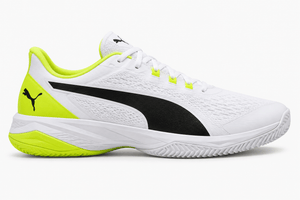
  Pickleball Shoes Men →
  Pickleball Shoes Women →
  Portable Net →
As an Amazon Associate, we earn from qualifying purchases.
How to Structure Your Pickleball Training Sessions
The best pickleball drills are only effective when structured into a proper training session. Here's a recommended session structure:
- Warm-up (10 min): Dynamic stretching, split step practice, slow cross-court dinking
- Technical drills (20 min): Focus on one specific shot — third shot drop, reset, dink, or volley
- Tactical drills (15 min): Transition zone patterns, speed-up sequences, or pressure points
- Match play (15 min): Free points with a specific focus (e.g., "only speed up above net height")
- Cool-down (5 min): Static stretching, breathing, review of session goals
Pickleball Drills: Common Mistakes to Avoid
- Rushing to the kitchen: Always stop and set before hitting — never run and swing at the same time
- Attacking low balls: Only speed up when the ball is above net height — attacking low balls creates errors
- Ignoring the third shot drop: This is the most important shot in pickleball — dedicate serious drill time to it
- No split step: Without a split step, you'll always be late to the ball — make it automatic
- Skipping dink drills: The kitchen game wins matches — dinking must be drilled every session
🏓 Ready to Take Your Pickleball Further?
Our Pickleball Made Easy Collection gives you 50+ structured drills, footwork patterns, and a complete training system for every level.
Get the Pickleball Made Easy Collection →
Frequently Asked Questions: Pickleball Drills
What are the best pickleball drills for beginners?
The best pickleball drills for beginners are the cross-court dink drill, the groundstroke rally drill, and the serve and return drill. These build the three core skills every beginner needs: kitchen consistency, baseline control, and serve placement.
How often should I do pickleball drills?
Ideally, dedicate at least one session per week purely to pickleball drills rather than match play. Two drill sessions per week will accelerate improvement significantly. Even 20 minutes of focused drilling before a match session makes a measurable difference.
Can I do pickleball drills alone?
Yes — the solo wall drill is excellent for individual practice. You can also practice your serve alone, work on footwork patterns, and shadow swing to groove your technique. However, most pickleball drills are more effective with a partner or coach.
What is the most important pickleball drill?
The third shot drop drill is the single most important pickleball drill at any level above beginner. It is the shot that allows you to transition from the baseline to the kitchen — without it, you'll be stuck at the baseline while your opponents control the net.
How do I improve my pickleball dinking?
Dedicate 10 minutes of every session to cross-court dinking. Focus on keeping the ball low, using soft hands, and landing in the kitchen. Patience is the key — wait for the right ball to attack rather than forcing the speed-up. Our Pickleball Made Easy Collection includes a complete dinking programme with 50+ structured drills.
What equipment do I need for pickleball drills?
At minimum you need a pickleball paddle and pickleball balls. The right footwear matters too — check out pickleball shoes for men and pickleball shoes for women. For solo or informal practice, a portable pickleball net lets you set up anywhere.