French Open: A Guide to Roland-Garros and Clay-Court Tennis
The French Open asks a different question from the other Grand Slams. It is not enough to hit a good attacking shot. Often, you have to hit another one, recover your position, and start the work again.
Affiliate Disclosure: This article includes affiliate links. We may earn a commission at no extra cost to you if you purchase through them. We only recommend quality products and programs relevant to our readers. This is an independent guide, not an endorsement by Roland-Garros.
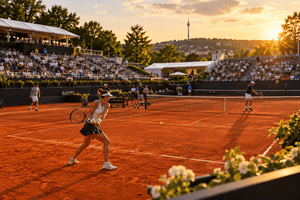
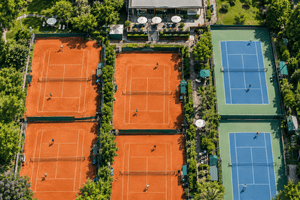
Played at Roland-Garros in Paris, the tournament is the clay-court Grand Slam. Its red courts reward movement, spin, patience, and the courage to attack when an opening finally appears.
This guide explains the tournament and the tennis. For purchasing advice, see our separate Roland Garros tickets guide.
What Is the French Open?
The French Open is one of the four Grand Slam tournaments, alongside the Australian Open, Wimbledon, and the US Open. It is staged at Stade Roland-Garros in Paris, France.
The event includes men's and women's singles, doubles, mixed doubles, and junior and wheelchair competitions. The singles championships attract most of the headlines, but they are not the whole tournament.
It traditionally takes place in late May and early June. For the next edition, the official Roland-Garros website currently advertises an overall event window of 17 May to 6 June 2027. Check the detailed calendar before treating every day as a main-draw session.
Why Is It Called Roland-Garros?
French Open and Roland-Garros are names used for the same tournament. The first describes its place in international tennis; the second is the name associated with its stadium and official identity.
Roland Garros was a French aviator, not a tennis champion. The venue carries his name.
The tournament's roots reach back to the French Championships in 1891. It opened to international competitors in 1925, moved to its Roland-Garros home in 1928, and joined the Open Era in 1968.
Those are different milestones, not competing answers to the question of when the tournament began. For the wider story, read our history of tennis.
Why the French Open Is Played Differently
Clay Changes the Bounce
Clay generally takes speed out of the ball and can produce a higher bounce than quicker, lower-bouncing surfaces. That gives defenders more time, but it also lets heavy topspin climb into uncomfortable hitting zones.
The effect varies with conditions. Temperature, moisture, wind, and the balls all influence how a match feels.
A warm afternoon and a cool evening can ask different things of the same players. Calling clay simply “slow” misses that detail.
Movement Is Part of the Shot
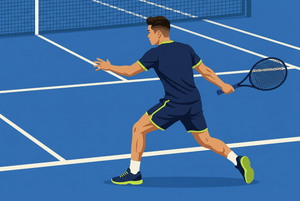
On clay, players have to manage both the arrival and the recovery. Sliding is useful when it is controlled; it is not a substitute for good positioning.
Watch how a player brakes, strikes, and pushes back into the court. The spectacular slide matters less if the next ball finds them stranded.
One Big Shot May Not Finish the Point
A strong serve can still be a weapon. But the surface often gives the returner more opportunity to put the ball back and begin a rally.
That makes the next shot important. A serve into space, a deep forehand, and an approach behind a genuinely short ball can work as a sequence rather than isolated attempts at winners.
Three Patterns Worth Watching at Roland-Garros
The Heavy Ball Followed by the Short Ball
A high, deep topspin shot can push an opponent back. A drop shot or shorter angle then asks that same opponent to cover the court in the opposite direction.
The drop shot is not automatically clever. It works best when court position and the preceding rally have created the opportunity.
Opening the Court Before Changing Direction
Cross-court exchanges can look repetitive until one player earns a shorter reply. The eventual change down the line is often the result of patient preparation.
Watch the ball that created the opening, not just the winner that followed it. That is usually where the tactical lesson sits.
Recovering After an Attack
On clay, even an excellent attacking shot may come back. Players need to expect the extra ball and move accordingly.
For club players, that is a useful habit on every surface. Admiring a shot is not a recovery plan.
French Open Champions Who Shaped Its Identity
Rafael Nadal's 14 men's singles titles at Roland-Garros are central to the tournament's modern history. His combination of spin, movement, and sustained pressure made him an extraordinary clay-court competitor.
Chris Evert won seven women's singles titles here. Her record is a reminder that control, anticipation, and repeatable depth can be as distinctive as explosive hitting.
Björn Borg, Steffi Graf, Justine Henin, and Gustavo Kuerten also left lasting marks on the tournament. Their games were not identical, which is part of the point.
There is no single clay-court personality. The surface rewards players who can connect their strengths into a workable pattern.
Scoring and Match Formats
In the standard main-draw singles format, men play best of five sets and women play best of three. A best-of-five match is won by the first player to take three sets.
The deciding set uses a ten-point tiebreak at 6–6, with a two-point margin required. Doubles and other competitions can use different formats, so check the rules for the specific event.
If the score display is unfamiliar, our tennis scoring guide explains points, games, and sets.
Planning a French Open Visit
Start with the official calendar and identify the experience you want. Early rounds and later championship sessions offer different schedules and atmospheres.
Check exactly which courts and sessions your ticket covers. Grounds access should not be assumed to include a reserved seat on every show court.
Leave time for travel and entry checks. Review current bag, food, bottle, and accessibility information before packing rather than relying on a previous year's policy.
Our French Open ticket-buying guide covers that side of the trip in more detail. Confirm current purchase arrangements through official channels before paying.
What Recreational Players Can Learn
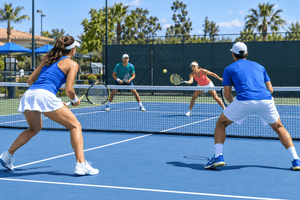
You do not need Nadal's forehand to borrow a useful clay-court principle. Start with depth, sensible clearance over the net, and a recovery step after every shot.
In practice, try a controlled cross-court rally before allowing a change of direction. The goal is to recognize a suitable ball, not to escape the rally at the first opportunity.
Be cautious about copying slides if you have not learned the movement on a suitable surface. Ask a coach to help you develop safe braking and recovery instead.
Nathan & Giselle Martin — The Coaches the Pros Trust
For over 20 years, Nathan and Giselle Martin have been the trusted strength & conditioning team behind some of tennis's biggest names, including Martina Navratilova, Lleyton Hewitt and Sam Stosur. Their tennis-specific programs bring court-tested preparation methods to players beyond the professional tour.
Explore structured off-court training to complement live lessons and regular practice. Choose a program appropriate to your level and goals.
“Nathan & Giselle Martin are the consummate professionals when it comes to tennis training… truly impressed with their training methods and expertise.”
Use code TM888 for 10% off.
Train with Nathan & Giselle Martin →These are separate recommended resources, not programs run by or affiliated with Roland-Garros.
Frequently Asked Questions
Are the French Open and Roland-Garros the same?
Yes. Both names refer to the Grand Slam tournament held at Stade Roland-Garros in Paris.
What surface is the French Open played on?
It is played on red clay. Court behaviour also depends on weather, maintenance, and match conditions.
Why are rallies often longer on clay?
The surface generally gives defenders more time and makes outright winners harder to produce. That is a tendency, not a rule for every point or match.
Does every French Open match use five sets?
No. Men's main-draw singles uses best of five, while women's main-draw singles uses best of three. Other competitions have their own formats.
The Appeal Is in the Work Between the Winners
The French Open makes the construction of a point unusually visible. You see the depth that forces a retreat, the recovery that keeps a rally alive, and the short ball that finally invites an attack.
Watch that work, and the tournament becomes more than a collection of red-court highlights. It becomes a lesson in how to build an advantage without trying to finish every point immediately.
Tennis Gear Shop
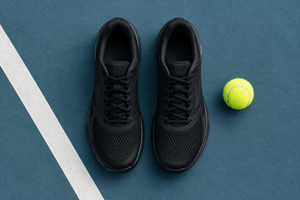
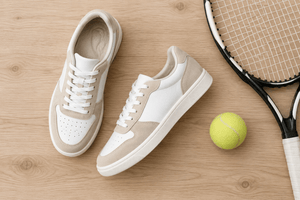
Explore Tennis Shoes, Tennis Rackets, Tennis Balls, Tennis Bags, Diamond Tennis Bracelets, Tennis Overgrips, and Tennis Clothing for your own court sessions.
Visit the Tennis Gear Shop →Plan focused practice with our tennis books and training resources.
Recommended Tennis Gear, Bags & Accessories
Browse our hand-picked Amazon storefront — the best tennis rackets, overgrips, bags, shoes, jewellery and training accessories, all curated by Tennis Mindset.
Visit Our Amazon Storefront →The Complete Tennis Bundle

Turn match-watching inspiration into regular work on drills, footwork, and the mental game.
Explore the Complete Tennis Bundle →You might also be interested in:
- Roland Garros Tickets: Complete Guide to Buying French Open Tennis Tickets
- The Origin of Tennis: From Royal Handball to a Global Phenomenon
Prepared in October 2026. Confirm schedules, rules, and ticket arrangements through official tournament information before booking. Use code TM888 for 10% off Tennis Mindset coaching programs. Affiliate links help support Tennis Mindset at no extra cost to you.