What Tennis Players Get Wrong About Pickleball Gear (And What Actually Transfers)
If you’ve spent years on a tennis court, your first pickleball session feels familiar for about ten minutes. The footwork carries over. The hand-eye carries over. Then someone hits a soft ball that dies at your feet in the non-volley zone, you try to half-volley it like a tennis player, and it sails out. Welcome to the sport.
Most of what tennis players bring to pickleball is an asset. Some of it is a liability, and a surprising amount of the liability shows up in gear decisions made before you’ve hit a ball. Here’s what actually transfers and what doesn’t.
Affiliate Disclosure: This article contains affiliate links. If you purchase through these links, we may earn a small commission at no extra cost to you. We only recommend quality products we believe in.
Your Racquet Instincts Will Steer You Wrong
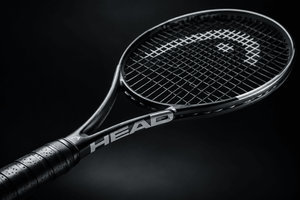
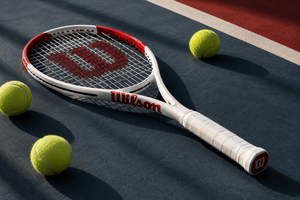
A tennis racquet is a spring. String tension, a hollow frame, and a long lever arm all store and return energy, and a good tennis player learns to feel that trampoline effect and time it. A pickleball paddle is not a spring. It’s a solid panel — typically a polypropylene honeycomb core sandwiched between carbon fibre or fibreglass face sheets — and the ball is a hard plastic wiffle ball. There is very little trampoline. Power comes from the swing, not from the equipment.
This matters because tennis players tend to shop for pickleball paddles the way they shop for racquets: heavier head, more power, longer handle. That’s how you end up with a 16-inch elongated paddle that feels like home on the baseline and like a shovel at the kitchen line, where most points are actually won.
The better instinct for a converting tennis player is usually the opposite: a standard or slightly widebody shape, a mid-weight (roughly 7.8 to 8.2 ounces), and a 16mm core rather than a thinner 14mm. The thicker core damps the ball, which tames the overhit you’ll be fighting for your first few months, and the wider shape forgives the off-centre contact you’ll make while your eye adjusts to a ball that doesn’t bounce like a tennis ball.
🎳 Shop Pickleball Paddles on Amazon →
Grip Size Is Where Tennis Players Actually Have an Edge
Tennis players already know their grip size and already know that a wrong grip size shows up as wrist and forearm strain. Pickleball grips run in the same general circumference range (most paddles ship at 4 to 4.375 inches), and the same rule applies: with the paddle in your hand, the index finger of your other hand should fit in the gap between your fingertips and the base of your palm.
Where tennis players often go wrong is handle length. A 5.5-inch handle accommodates a two-handed backhand, which a lot of converting tennis players want to keep. A shorter 5-inch handle gives you more paddle face. Neither is right; know which one you’re buying and why.
Shoes: The One Thing You Should Absolutely Bring Over
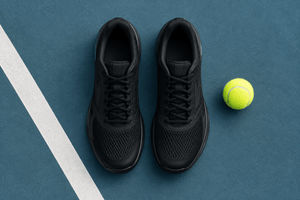
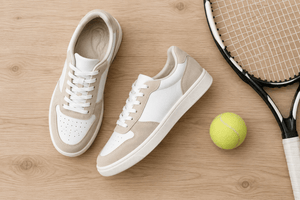
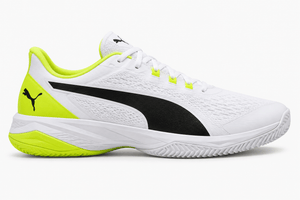
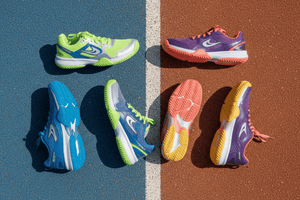
Pickleball has a real ankle-injury problem, and a lot of it comes from people playing in running shoes. Running shoes are built for forward motion and have a raised, soft heel that rolls easily on a lateral cut. Tennis shoes are built for exactly the lateral, stop-start movement pickleball demands, with a flatter, wider sole and reinforced sides.
If you own a good pair of hard-court tennis shoes, you already own good pickleball shoes. Dedicated “pickleball shoes” exist and some are excellent, but they are mostly tennis shoes with pickleball marketing. Don’t feel pressure to buy a second pair before you’ve decided you like the sport.
- 🎳 Pickleball shoes for men — court-specific lateral support
- 🎳 Pickleball shoes for women — flat sole, reinforced sidewalls
- 🎾 Tennis shoes for men — also excellent for pickleball
- 🎾 Tennis shoes for women — hard court construction works for pickleball courts too
The Ball Changes Everything About Spin
Tennis players are spin players. Topspin is the foundation of the modern game, and the felt on a tennis ball grabs the strings and lets you generate it. A pickleball is smooth plastic with holes in it. Paddle faces with a textured carbon surface can grip the ball and produce meaningful spin, but the ceiling is far lower than in tennis, and the ball’s light weight means wind and air resistance matter more than rotation.
Your heavy topspin forehand will produce a modest amount of dip and a lot of unforced errors until you flatten it out. The players who convert fastest are usually the ones who accept early that the pickleball game is about placement, patience, and the soft game rather than pace.
🎳 Shop Pickleball Balls on Amazon →
What to Actually Do First
Don’t buy a $250 paddle in week one. Borrow, rent, or play with a loaner from a local club for a few sessions, decide whether the sport sticks, and then buy one mid-range paddle you can grow into. Bring your tennis shoes. Leave your tennis expectations about power and spin at the gate.
If you want a deeper walkthrough of paddle shapes, cores, and what the spec sheets actually mean, Pickleball Insiders keeps a plain-English beginner’s guide to pickleball that doesn’t assume you know what a “poly core” is.
🎳 Pickleball Insiders — Guest Author Bio
Jordan is the editor of Pickleball Insiders, an independent pickleball gear-review site, and a 4.7 DUPR player based in New York. He came to the sport from tennis and still keeps a two-handed backhand.
Train for Pickleball with World-Class Coaches
Once you’ve decided pickleball is your sport, structured training makes the difference between a player who plateaus and one who keeps improving. Two resources from Tennis Mindset are worth bookmarking:
🎳 Pickleball Training Programs
Nathan & Giselle Martin — Coaches Behind Grand Slam Champions
For over 20 years, Nathan and Giselle Martin have coached tennis’s biggest names — Martina Navratilova, Lleyton Hewitt and Sam Stosur. Their court-tested movement and fitness programs translate directly to pickleball: footwork, lateral speed, court positioning and the mental game are universal. Programs are structured for all levels, from beginners to competitive players.
“Nathan & Giselle Martin are the consummate professionals when it comes to tennis training… truly impressed with their training methods and expertise.”
Use code TM888 for 10% off.
Explore Pickleball & Tennis Training →🎳 Also from Tennis Mindset
Pickleball Made Easy — Drills, Exercises & Training Guide

Drills, court positioning, the soft game and the mental side of pickleball — essential reading for any tennis player making the conversion properly.
Get the Pickleball Book →Essential Pickleball Gear for Tennis Players Converting
- 🎳 Pickleball paddles — standard widebody, mid-weight, 16mm core for converting tennis players
- 🎳 Pickleball balls — indoor and outdoor options
- 🎳 Pickleball shoes for men — or use your hard-court tennis shoes
- 🎳 Pickleball shoes for women — lateral support, flat sole
- 🎳 Portable pickleball net — play anywhere, anytime
🛍️ Tennis Mindset on Amazon
Recommended Tennis & Pickleball Gear
Browse our hand-picked Amazon storefront — the best rackets, paddles, shoes and accessories, curated by Tennis Mindset.
Visit Our Amazon Storefront →You Might Also Like
- Tennis Club: Complete Guide to Joining, Playing and Improving
- Alta Tennis: Complete Guide to the Alta League Format
- Black Tennis Shoes: Best Black Court Shoes for Men & Women
- Women’s Tennis Footwear: Complete Guide to the Best Tennis Shoes for Women
- Head Tennis Racket: Complete Guide to the Best Head Racquets
Guest post published with permission from Pickleball Insiders. Affiliate links help support Tennis Mindset at no extra cost to you. Use code TM888 for 10% off Tennis Mindset training programs.