Tennis Zero Codes: Why Is 0 Called Love in Tennis? (Complete Scoring Guide)
If you've ever watched a tennis match and wondered why the score jumps from 0 to 15 to 30 to 40 — or why 0 is called "love" — you're not alone. Tennis zero codes and the tennis scoring system confuse beginners and casual fans worldwide. This complete guide explains everything: why 0 is called love, how the point system works, what deuce and advantage mean, and how games, sets, and matches are structured.
🎾 Elite Tennis Coaching Programs — At Affordable Prices
The internet has made world-class tennis coaching accessible to everyone. The same coaches behind 5 World No.1 players — including Martina Navratilova — now offer structured online programs for players of all levels.
See All Coaching Programs →What Are Tennis Zero Codes?
Tennis zero codes refer to the unique way tennis scores are called out — particularly the use of "love" for zero, and the unusual sequence of 15, 30, 40 instead of 1, 2, 3. These codes are part of what makes tennis one of the most distinctive sports in the world, with a scoring tradition that dates back centuries.
Understanding tennis zero codes is the first step to fully enjoying the sport — whether you're watching Wimbledon, playing your first club match, or helping a child learn the game.
Why Is 0 Called "Love" in Tennis?
The most famous of all tennis zero codes — why is 0 called "love"? There are several theories, and historians debate which is correct:
Theory 1: From the French "l'oeuf" (the egg)
The most widely cited explanation is that "love" comes from the French word l'oeuf, meaning "the egg" — because a zero looks like an egg. Tennis has deep French roots (the word "tennis" itself comes from the French tenez), and this egg theory is the most commonly accepted origin of the tennis zero code for 0.
Theory 2: Playing for Love (Not Money)
Another theory suggests that "love" comes from the expression "playing for love" — meaning playing for the pure enjoyment of the game, with nothing at stake. A player with zero points has "nothing" — they are playing purely for love of the game.
Theory 3: From the Dutch "lof" (honour)
A third theory traces "love" to the Dutch word lof, meaning honour or praise — suggesting that a player with zero points is still playing honourably. This theory is less widely accepted but adds to the rich linguistic history of tennis zero codes.
The Tennis Point System: 15, 30, 40
The other great mystery of tennis zero codes — why do points go 0, 15, 30, 40 instead of 0, 1, 2, 3? Again, there are competing theories:
The Clock Theory
The most popular explanation is that the scoring system was originally based on a clock face. Each point moved the hand of a clock by 15 minutes: 0 → 15 → 30 → 45. The 45 was later shortened to 40 to allow for deuce (when both players reach 40, the score is called "deuce" rather than "45-45"). This clock theory is the most widely taught explanation of tennis zero codes.
The Medieval Game Theory
Some historians believe the scoring system comes from a medieval French ball game called jeu de paume (game of the palm), which used a court divided into sections worth 15, 30, and 45 points based on the player's position on the court.
🎾 New to Tennis? Start Here
Get the right racket and equipment to start your tennis journey.
 Tennis Balls →
  Tennis Shoes Men →
  Tennis Shoes Women →
As an Amazon Associate, we earn from qualifying purchases.
How Tennis Scoring Works: A Complete Guide
Now that you understand tennis zero codes, here's how the full scoring system works from point to match:
Points Within a Game
Each game is scored using the tennis zero codes system:
- 0 points = Love
- 1 point = 15
- 2 points = 30
- 3 points = 40
- 4 points = Game (if the player leads by at least 2 points)
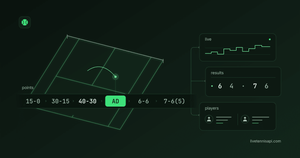
The server's score is always called first. So "15-Love" means the server has 15 and the receiver has 0. "Love-30" means the server has 0 and the receiver has 30.
Deuce
When both players reach 40 (three points each), the score is called deuce — not "40-40". From deuce, a player must win two consecutive points to win the game:
- The player who wins the first point after deuce has the advantage ("Ad-in" if the server leads, "Ad-out" if the receiver leads)
- If the player with advantage wins the next point, they win the game
- If they lose the next point, the score returns to deuce
- This can continue indefinitely until one player wins two consecutive points
Games Within a Set
A player must win 6 games to win a set, with a lead of at least 2 games. So the possible set scores are 6-0, 6-1, 6-2, 6-3, 6-4, or 7-5. If the set reaches 6-6, a tiebreak is played (in most formats).
The Tiebreak
A tiebreak is played to 7 points (with a 2-point lead required). Tiebreak points are scored 1, 2, 3 — not using tennis zero codes. The first player to reach 7 points (with a 2-point lead) wins the tiebreak and the set 7-6.
Sets Within a Match
Most professional matches are played as best of 3 sets (first to win 2 sets) or best of 5 sets (first to win 3 sets). Grand Slam men's singles is best of 5; all other professional matches are best of 3.
How to Read a Tennis Score
Here are some examples of how tennis zero codes work in practice:
- "Love-15" — Server has 0 points, receiver has 1 point
- "30-Love" — Server has 2 points, receiver has 0 points
- "40-30" — Server has 3 points, receiver has 2 points. Server needs one more point to win the game
- "Deuce" — Both players have 3 points (40-40). Two consecutive points needed to win
- "Advantage server" — Server won the first point after deuce. One more point wins the game
- "6-4, 3-6, 7-5" — A three-set match score. Player A won the first set 6-4, lost the second 3-6, won the third 7-5
Tennis Scoring: Common Questions
Why Is It Called a "Game, Set, Match"?
"Game, set, match" is the phrase used to announce the end of a tennis match. It means the final game of the final set has been won, completing the match. It's one of the most iconic phrases in sport — and it perfectly captures the three-level structure of tennis scoring: points make games, games make sets, sets make matches.
What Is a Bagel in Tennis?
A "bagel" is slang for winning a set 6-0 — because a zero looks like a bagel (or an egg — back to those tennis zero codes!). Winning a match 6-0, 6-0 is called a "double bagel" and is one of the most dominant results possible in tennis.
What Is a Breadstick in Tennis?
A "breadstick" is slang for winning a set 6-1. Less dominant than a bagel, but still a very one-sided result.
What Does "Ad" Mean in Tennis?
"Ad" is short for advantage — the score after deuce when one player wins a point. "Ad-in" means the server has the advantage; "Ad-out" means the receiver has the advantage. Win the next point and you win the game; lose it and you're back to deuce.
🎾 Ready to Start Playing Tennis?
The Complete Tennis Bundle gives you everything you need — drills, footwork, and the mental game — to go from beginner to confident player.
 Get the Complete Tennis Bundle →
Tennis Scoring Quick Reference
| Points Won | Score Called |
|---|---|
| 0 | Love |
| 1 | 15 |
| 2 | 30 |
| 3 | 40 |
| 3 each | Deuce |
| 1 ahead after deuce | Advantage |
| 2 ahead after deuce | Game |
Frequently Asked Questions: Tennis Zero Codes
What does "love" mean in tennis?
"Love" is the tennis zero code for 0. The most widely accepted origin is the French word l'oeuf (the egg), because a zero looks like an egg. It may also come from the expression "playing for love" — playing for nothing, with no points scored.
Why does tennis use 15, 30, 40?
The most popular theory is that the scoring system was originally based on a clock face, with each point moving the hand 15 minutes: 0 → 15 → 30 → 45. The 45 was shortened to 40 to allow for deuce. These are the original tennis zero codes that have been used for centuries.
What is deuce in tennis?
Deuce is the score when both players have won 3 points (40-40). From deuce, a player must win two consecutive points to win the game. The player who wins the first point after deuce has the "advantage."
What is a tiebreak in tennis?
A tiebreak is played when a set reaches 6-6. It is scored 1, 2, 3 (not using tennis zero codes) and the first player to reach 7 points with a 2-point lead wins the tiebreak and the set 7-6.
How many sets are in a tennis match?
Most professional matches are best of 3 sets (first to win 2). Grand Slam men's singles is best of 5 sets (first to win 3). Club and recreational matches are typically best of 3 sets.