Red Ball Tennis Equipment: The Complete Guide for Mini Tennis Players
Red ball tennis equipment is the starting point for every young tennis player's journey. The red ball stage — also known as mini tennis — is designed for children aged 4 to 8, using slower, lower-bouncing balls and shorter rackets that make the game accessible, fun, and developmentally appropriate from day one.
Affiliate disclosure: This article contains affiliate links. If you purchase through these links, we may earn a small commission at no extra cost to you.
Whether you're a parent setting up your child's first tennis experience, a coach running a mini tennis programme, or a school looking to introduce the sport — this guide covers everything you need to know about red ball tennis equipment, how it works, and how to get the most out of it.
What Is Red Ball Tennis?
Red ball tennis is the first stage of the ITF's Kids' Tennis pathway, designed for children aged 4–8. It uses a foam or low-compression red ball that bounces approximately 75% lower than a standard tennis ball, a smaller court (typically 11m x 5.5m), and shorter, lighter rackets suited to small hands and developing motor skills.
The red ball stage is not just a scaled-down version of adult tennis — it's a carefully designed learning environment that helps children develop hand-eye coordination, movement patterns, and a love of the game before the technical demands of the full sport are introduced.
🎾 Elite Tennis Coaching Programs — At Affordable Prices
The internet has made world-class tennis coaching accessible to everyone. The same coaches behind 5 World No.1 players — including Martina Navratilova — now offer structured online programs for players of all levels.
See All Coaching Programs →After red ball, children progress through orange ball (ages 8–10) and green ball (ages 9–11) before moving to the full yellow ball game.
Red Ball Tennis Equipment: What You Need
1. Red Tennis Balls
The most important piece of red ball tennis equipment is, of course, the ball itself. Red balls come in two main types:
- Foam red balls — ultra-soft, ideal for the very youngest beginners (ages 4–6). They bounce very low and are safe for indoor use
- Low-compression red balls — slightly firmer, with a small amount of bounce. Better for slightly older beginners (ages 6–8) who are ready for a bit more pace and response
Look for ITF-approved red balls from brands like Wilson, Babolat, Head, and Dunlop. They are widely available and affordable.
🎾 Shop Red Ball Tennis Equipment on Amazon
Red balls, mini rackets, nets and training gear — everything you need to get started with mini tennis, delivered fast.
Shop Red Ball Tennis Equipment →As an Amazon Associate, we earn from qualifying purchases.
2. Rackets for Red Ball Tennis
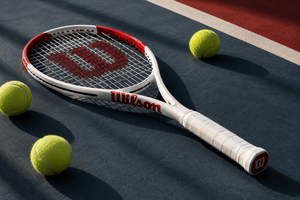
Children at the red ball stage need a racket that matches their size and strength. Using an adult racket at this age is one of the most common mistakes parents make — it leads to poor technique, frustration, and potential injury.
For red ball players, look for:
- Racket length: 19–21 inches (for ages 4–6) or 21–23 inches (for ages 6–8)
- Weight: as light as possible — typically 150–200g
- Head size: larger head sizes (100+ sq in) for a bigger sweet spot
- Grip size: the smallest available — children should be able to wrap their fingers comfortably around the handle
Top brands for junior red ball rackets include Wilson, Babolat, Head, and Prince — all of which produce excellent mini tennis frames. The Wilson Starter Easy, Babolat Fly, and Head Speed Kids are popular choices at this stage. When in doubt, go lighter and shorter — a child can always grow into a slightly larger racket, but a frame that's too heavy will immediately affect their swing and enjoyment.
We'll be adding specific racket affiliate links here shortly — in the meantime, you can browse a full selection of junior red ball rackets below.
🎾 Browse All Tennis Equipment on Amazon
Rackets, balls, nets, training accessories and more — everything for mini tennis and beyond.
Browse All Tennis Equipment →As an Amazon Associate, we earn from qualifying purchases.
3. Mini Tennis Net
A portable mini tennis net is essential for setting up a proper red ball court. Most mini tennis nets are adjustable in height and can be set up on any flat surface — a driveway, garden, sports hall, or playground. Look for nets that are easy to assemble and pack away, especially for coaching sessions with multiple courts.
4. Court Markers and Cones
For coaches running group sessions, a set of court markers or cones is invaluable for setting up multiple mini courts quickly. They're also great for creating target zones, movement drills, and game-based activities that keep young players engaged.
5. Tennis Training Equipment for Red Ball Sessions
Beyond the basics, there's a range of tennis training equipment that can enhance red ball sessions:
- Ball hoppers — essential for coaches feeding balls during drills
- Agility ladders and cones — for movement and footwork games
- Foam targets — to make aiming fun and competitive
- Resistance bands — for older juniors beginning to develop physical conditioning
🎾 Find All Your Red Ball Tennis Equipment
Balls, rackets, nets, hoppers and training accessories — all in one place on Amazon.
Red Ball Equipment → All Tennis Equipment →As an Amazon Associate, we earn from qualifying purchases.
How to Set Up a Red Ball Tennis Court
A standard red ball court is 11m x 5.5m — roughly a quarter of a full tennis court. The net height is 0.8m. In practice, most coaches adapt whatever space is available, and the exact dimensions matter less than creating a fun, manageable playing environment for young children.
You can set up a red ball court on:
- A badminton court (the lines work well)
- A school sports hall
- A driveway or garden with a portable net
- A full tennis court divided into multiple mini courts
Teaching Mini Tennis: Tips for Parents and Coaches
The red ball stage is about building a love of the game first, technique second. Here are the key principles for effective mini tennis coaching:
- Keep rallies going — success at this age is measured in consecutive hits, not winners. Feed the ball to make it easy to hit back
- Use games, not drills — young children learn through play. Design activities that feel like games even when they're developing specific skills
- Short sessions — 30–45 minutes is plenty for ages 4–8. Attention spans are short; keep energy high and finish on a positive
- Celebrate effort, not outcome — praise the swing, the movement, the try — not just the shot that went in
- Introduce scoring gradually — simple formats like first to 7 points work well before introducing full game scoring
The Mini Tennis Book: Your Complete Resource
If you're serious about teaching mini tennis — whether as a parent, coach, or school — the Complete Tennis Bundle from Tennis Mindset includes a dedicated Mini Tennis book alongside two other essential tennis training resources.
The bundle covers:
- 🎾 Mini Tennis — a complete guide to the red, orange and green ball stages, with drills, games and progressions for every level
- 🎾 Tennis Drills — court movement, footwork and shot-making drills for all levels
- 🎾 The Mental Game — how to develop focus, resilience and competitive mindset from a young age
It's the most complete resource available for anyone teaching or learning tennis from the very beginning.
🎾 Get the Complete Tennis Bundle — Includes the Mini Tennis Book
3 books in one: Mini Tennis, Tennis Drills & The Mental Game. Everything you need to teach and play tennis from the very first red ball session.
 Get the Complete Tennis Bundle →
Red Ball Tennis Equipment: Frequently Asked Questions
What age is red ball tennis for?
Red ball tennis is designed for children aged 4–8. It's the first stage of the ITF Kids' Tennis pathway, using slower balls, smaller courts and shorter rackets to make the game accessible for young beginners.
What is the difference between foam and low-compression red balls?
Foam red balls are ultra-soft with almost no bounce — ideal for the very youngest beginners (ages 4–6) and indoor use. Low-compression red balls are slightly firmer with a small amount of bounce, better suited to ages 6–8 who are ready for a bit more pace.
What size racket does a red ball player need?
Children aged 4–6 typically use a 19–21 inch racket. Children aged 6–8 move up to a 21–23 inch frame. The racket should be light (150–200g) with a large head size and the smallest available grip. Browse a full range of junior tennis rackets on Amazon.
Can I use a regular tennis ball for red ball tennis?
No — a standard yellow tennis ball bounces too high and too fast for young beginners. The red ball's slower bounce is specifically designed to give children enough time to see the ball, move to it, and swing. Using a regular ball at this stage makes the game much harder and less enjoyable.
Where can I buy red ball tennis equipment?
Red ball tennis equipment is widely available online. Amazon has a great selection of red balls, mini rackets and training accessories with fast delivery. You can also browse all tennis equipment on Amazon for a wider range.
What is platform tennis equipment?
Platform tennis is a different sport played on a smaller, raised court with paddles and a sponge ball — not to be confused with red ball mini tennis. If you're looking for platform tennis equipment, it requires specialist paddles and balls designed specifically for that sport.
What is equipment for tennis training?
Beyond balls and rackets, useful equipment for tennis training includes ball hoppers, agility cones, resistance bands, target markers, and portable nets. For red ball sessions specifically, a portable mini net and a set of court markers are the most valuable additions after the balls and rackets themselves. Browse all tennis training equipment on Amazon.