Doctor Explains Tennis Elbow and Treatment
Share
Tennis elbow has a way of coming back right when you think it's gone. You rest it, the ache fades, you pick up the racquet again, and a few weeks later, that same sharp pull is back on your backhand. That pattern is common, and it usually means the problem was never fully resolved in the first place.
The Real Cost of Sitting Out
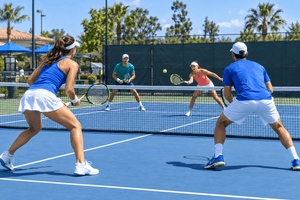
Anyone who's dealt with tennis elbow knows the physical pain is only half of it. The harder part is watching your doubles partner play without you, skipping league night because your grip won't hold up, or catching yourself avoiding your own backhand mid-rally just to get through a set. Some players start changing their grip just to avoid the pain, which only shifts the strain somewhere else and creates a second problem on top of the first. For players who build their week around court time, sitting out doesn't just cost matches. It costs the thing that made the sport feel good in the first place.
What's Actually Happening
Tennis elbow, or lateral epicondylitis, starts where the tendons on the outside of your elbow attach to the bone. Every backhand, every firm grip on the racquet, loads that tendon. Do it enough times without enough recovery, and small tears form faster than the tissue can repair itself.
Here's the part most players don't realize: once that tendon has been irritated for more than a few weeks, it's usually not inflamed anymore in the classic sense. It's degenerated. The fibers have broken down and started to disorganize. That distinction matters because it changes what actually helps. It's also why the same injury shows up under different names, like golfer's elbow, and why padel and pickleball players develop it too, since the grip and swing mechanics load the tendon in much the same way.
Why Rest and Physical Therapy Alone Often Fall Short
Resting a degenerated tendon stops the irritation, but it doesn't rebuild the tissue. That's why so many players feel better after a few weeks off, go back to full play, and reinjure the same spot within a month. The tendon never actually healed. It just stopped hurting long enough to convince you it had. This is especially common heading into a tournament, when players push through soreness instead of giving the tendon the time it actually needs to rebuild.
Standard physical therapy helps, especially when it includes eccentric strengthening, but a generic program aimed at the elbow in general won't always target the specific area that's broken down. Players often end up stuck in a cycle: rest, feel better, play, flare up again, with the underlying tissue never getting the chance to actually rebuild.
Treatment Options Beyond Rest and PT
For a lot of players, a well-built eccentric strengthening program paired with bracing during play is enough to turn the tendon around over several weeks. The key is consistency and loading the tendon the right way, not avoiding it entirely.
When the tendon has been degenerated for a while, and conservative treatment hasn't moved the needle, regenerative options like PRP injections are worth a conversation with a doctor. PRP uses concentrated platelets from your own blood, injected directly into the damaged area, to trigger the body's repair process in tissue that's stalled out on its own. It works alongside rehab, giving the tendon a real chance to heal before more strengthening is layered on top. Most players notice real improvement within six to eight weeks, though full tendon remodeling can take a few months.
Beyond PRP, some players respond well to radial shockwave therapy, which uses targeted sound waves to stimulate blood flow and kickstart repair in tissue that's stopped healing on its own. For more stubborn cases, stem cell injections offer another regenerative option, drawing on the body's own cells to help rebuild what's been damaged. All of these approaches work by supporting the body's natural healing mechanisms, rather than simply numbing pain with medication or steroids.
Why Getting to the Root Cause Matters
A brace or an anti-inflammatory can get a player through a single match, but the tendon underneath stays degenerated until it's actually treated. Treatment aimed at the damaged tissue itself, instead of just the pain signal, is what finally lets players stop thinking about their elbow and get back to actually enjoying the game, not just getting through it.
Investing in treatment that addresses the root cause pays off beyond faster recovery. It means playing a full match without bracing for that familiar twinge, swinging freely through a backhand again, and genuinely enjoying time on the court with the people you play with.
When to Get It Looked At
A little soreness after a long match is normal. Pain that lingers past two or three weeks, keeps showing up at the same spot on the outside of your elbow, or starts weakening your grip, is worth getting evaluated. Catching it early, before the tendon has broken down further, almost always means a faster and simpler path back to full play. Waiting it out because you don't want to lose more time on the court usually ends up costing more time in the long run.
Getting Back on the Court
The sooner the tendon itself gets treated, the sooner you're back swinging without thinking about your elbow again. A smarter strengthening program, or a conversation about regenerative treatment when it's warranted, both aim at the same outcome: a tendon that's actually healed, not one that's just quiet for now.
About the Author
Dr. Ilana Etelzon, MD, is double board-certified in Physical Medicine & Rehabilitation and Interventional Pain Management, and a Regenexx Certified Core Provider. She treats active adults and athletes at Pain Doctors Medical, with locations across the New York and New Jersey area.