Fastest Tennis Serve Ever: Records, Top Players & How They Do It
What is the fastest tennis serve ever recorded — and who holds the tennis serve record that has stood for over a decade? The official record belongs to Sam Groth at 263.4 km/h (163.7 mph), clocked at the 2012 Busan Open Challenger in South Korea. This guide covers everything you want to know about the fastest recorded serve in tennis: the all-time men’s and women’s records, the fastest serves at each Grand Slam, and the technique that makes a truly fast serve possible.
🎾 Elite Tennis Coaching Programs — At Affordable Prices
The internet has made world-class tennis coaching accessible to everyone. The same coaches behind 5 World No.1 players — including Martina Navratilova — now offer structured online programs for players of all levels.
See All Coaching Programs →What Is the Fastest Tennis Serve Ever Recorded?
The fastest tennis serve in history — officially recognised by the ATP — is:
- Player: Sam Groth (Australia)
- Speed: 263.4 km/h (163.7 mph)
- Tournament: Busan Open Challenger, South Korea
- Year: 2012
- Surface: Hard court
Groth’s tennis serve record has stood for over a decade. It was set at a challenger event rather than a Grand Slam, but the ATP officially recognises it as the fastest serve in professional tennis history. Challenger events are fully professional competitions — the radar readings are just as official as anything recorded at Wimbledon or the US Open. Groth was known throughout his career as one of the biggest servers on tour, regularly hitting a fast serve above 230 km/h even on second serves.
Top 10 Fastest Tennis Serves in History (Men)
| Rank | Player | Speed | Year |
|---|---|---|---|
| 1 | Sam Groth (AUS) | 263.4 km/h (163.7 mph) | 2012 |
| 2 | Albano Olivetti (FRA) | 257.5 km/h (160.0 mph) | 2012 |
| 3 | John Isner (USA) | 253.0 km/h (157.2 mph) | 2016 |
| 4 | Ivo Karlovic (CRO) | 251.0 km/h (155.9 mph) | 2011 |
| 5 | Milos Raonic (CAN) | 249.0 km/h (154.7 mph) | 2012 |
| 6 | Andy Roddick (USA) | 249.4 km/h (155.0 mph) | 2004 |
| 7 | Joachim Johansson (SWE) | 246.0 km/h (152.9 mph) | 2004 |
| 8 | Roger Federer (SUI) | 230.0 km/h (143.0 mph) | Multiple |
| 9 | Novak Djokovic (SRB) | 220.0 km/h (136.7 mph) | Multiple |
| 10 | Rafael Nadal (ESP) | 217.0 km/h (134.8 mph) | Multiple |
Worth noting: two of the three fastest tennis serves ever recorded — Groth’s and Olivetti’s — were both hit in 2012 at challenger events. The lower-pressure environment may allow players to swing more freely and reach their absolute peak serve speed without the tactical caution that Grand Slam matches demand.
Fastest Tennis Serves: Women’s Records
Women’s serve speeds are lower than men’s, but the top women’s servers are still extraordinarily powerful. The fastest tennis serve among women belongs to Georgina Garcia Perez — though Sabine Lisicki remains one of the most celebrated big servers in women’s tennis history:
| Rank | Player | Speed | Year |
|---|---|---|---|
| 1 | Georgina Garcia Perez (ESP) | 220.0 km/h (136.7 mph) | 2018 |
| 2 | Sabine Lisicki (GER) | 210.8 km/h (131.0 mph) | 2014 |
| 3 | Brenda Fruhvirtova (CZE) | 214.0 km/h (133.0 mph) | 2022 |
| 4 | Venus Williams (USA) | 207.6 km/h (129.0 mph) | 2007 |
| 5 | Serena Williams (USA) | 207.0 km/h (128.6 mph) | Multiple |
| 6 | Karolina Pliskova (CZE) | 205.0 km/h (127.4 mph) | Multiple |
Sabine Lisicki’s 131 mph (210.8 km/h) fast serve from 2014 is one of the most talked-about moments in women’s tennis. It’s the kind of serve that makes you stop and rewind the clip — a flat, explosive bullet that barely gave the returner time to react.
Fastest Serve at Wimbledon
Wimbledon’s grass courts are the fastest surface in professional tennis, which is why they consistently produce the highest speed tennis serve readings at Grand Slam level. The current Wimbledon records are:
- Men: Taylor Fritz — 239.0 km/h (148.5 mph), 2022
- Women: Venus Williams — 207.6 km/h (129.0 mph), 2007
Fastest Serve at the US Open
The US Open hard courts also produce high serve speeds. Andy Roddick was the king of the fastest men’s serve at Flushing Meadows for years — regularly cracking 220 km/h and making his serve one of the most feared weapons in the game. His ability to hit a fast serve under pressure, especially on big points, was a defining feature of his career.
Fastest Recorded Serve in Tennis: Davis Cup Records
The Davis Cup has produced some memorable fastest recorded serve in tennis moments. Players often reach their peak serve speeds in the high-pressure, crowd-fuelled atmosphere of Davis Cup ties — where national pride pushes them to swing harder than they might in a regular tour match. Several notable record serve in tennis speeds outside the main ATP Tour have come from Davis Cup rubbers.
Why Are Some Serves So Much Faster?
The players who hold the tennis serve record don’t just have strong arms — they have a specific set of technical qualities that separate a 120 mph serve from a 160 mph one.
1. Kinetic Chain
The fastest tennis serve starts from the ground, not the arm. Legs drive upward, the core rotates, the shoulder accelerates, and the arm and racket follow through explosively. Players who rely only on their arm lose a huge amount of potential pace.
2. Pronation
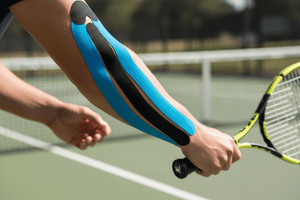
Forearm pronation at contact — rotating the forearm so the racket face turns forward through the ball — is the single biggest contributor to serve speed. The biggest servers pronate aggressively and fully, which is what generates a genuinely fast serve rather than just a hard-hit one.
3. Toss Placement
A flat serve toss sits slightly in front of the body and to the right (for right-handers), allowing the server to drive up and into the ball at full extension. A consistent toss is what gives players complete control over their serve direction and speed — and it’s often the first thing that breaks down under pressure.
4. Racket Head Speed
Serve speed is directly proportional to racket head speed at contact. Relaxed muscles accelerate faster than tense ones. The biggest servers stay loose right up until the moment of contact, then snap through the ball explosively. Tension is the enemy of a fast serve.
5. Height Advantage
Taller players have a higher contact point, which lets them hit down into the service box at a steeper angle — generating more pace while keeping the ball in. It’s no coincidence that many of the players with the fastest men’s serve records (Isner at 6’8”, Karlovic at 6’7”, Raonic at 6’6”) are exceptionally tall.

Frequently Asked Questions: Fastest Tennis Serve
What is the fastest tennis serve ever recorded?
The fastest tennis serve ever recorded is 263.4 km/h (163.7 mph) by Sam Groth of Australia, at the 2012 Busan Open Challenger in South Korea. The ATP officially recognises this as the tennis serve record for professional tennis.
Who has the fastest tennis serve right now?
Among active players, John Isner and Taylor Fritz have consistently recorded the fastest tennis serve speeds on the ATP Tour in recent years. Both regularly hit first serves above 220 km/h and have produced some of the fastest recorded serve in tennis readings at Grand Slam level.
What is the fastest women’s serve in tennis?
The fastest tennis serve among women is 220.0 km/h (136.7 mph) by Georgina Garcia Perez of Spain in 2018. Sabine Lisicki also recorded a famous 131 mph (210.8 km/h) fast serve in 2014 — one of the most celebrated in women’s tennis history.
What is Sabine Lisicki’s serve speed?
Sabine Lisicki recorded a fast serve of 131 mph (210.8 km/h) in 2014 — one of the fastest ever hit by a woman in professional tennis and a moment that’s still talked about in the sport today.
How fast does the average club player serve?
The average male club player serves between 130–160 km/h (80–100 mph). Female club players typically serve between 100–130 km/h (60–80 mph). Professional men average around 190–210 km/h on first serves — far below the tennis serve record but still seriously fast.
How can I increase my serve speed?
Focus on the kinetic chain (legs to core to arm), aggressive forearm pronation at contact, a relaxed arm that accelerates through the ball, and a toss that allows full extension. Racket head speed — not muscle tension — is what turns a decent serve into a genuinely fast serve.